
How to Build a Trading Routine That Actually Improves Results

A trading routine improves results by creating structure around preparation, watchlists, execution, journaling, and risk control.
How to Think Like a Market Operator, Not a Retail Gambler

A market operator thinks in process, capital flow, risk, and execution, not emotional action or retail gambling behavior.
The Difference Between a Trade Idea and a Trading System

A trade idea and trading system are different. One is a hypothesis, the other is a structured framework for execution and risk.
The Brutal Truth About Overtrading and Emotional Execution

Overtrading and emotional execution damage accounts by turning impatience, revenge, and weak discipline into repeated mistakes.
The Market Does Not Owe You Money: Build a Process

The market does not owe you money. Build a process with accountability, macro context, risk control, and disciplined execution.
Trade the Process, Not the Noise: The Valeron Markets Approach
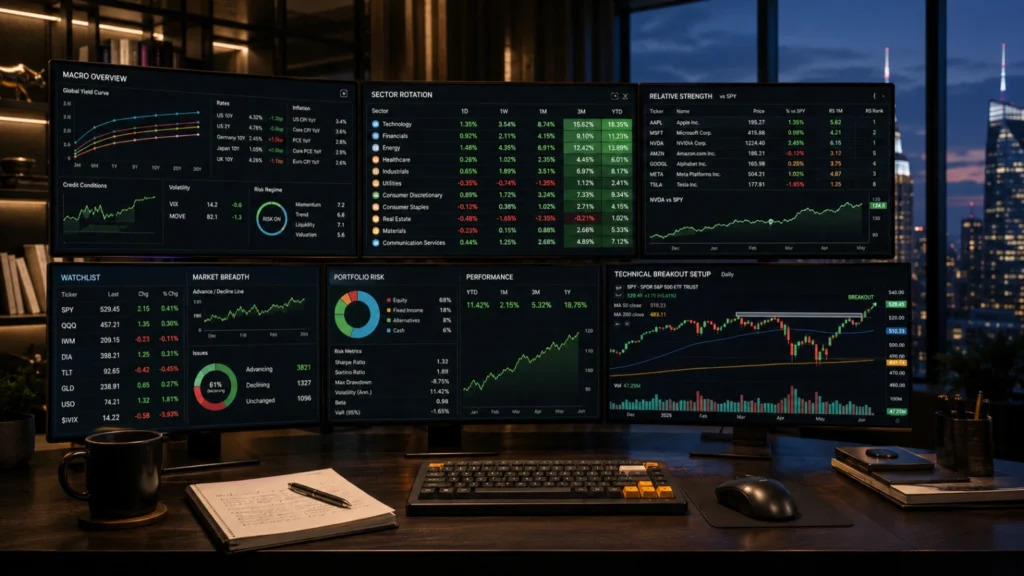
Trade the process not the noise with a Valeron framework built on macro context, sector leadership, technical execution, and risk.
Trading Is Not Prediction: It Is Structured Decision-Making

Structured decision-making in trading helps traders replace prediction with context, risk control, technical timing, and discipline.
Why Most Traders Lose Before They Even Enter the Market

Why most traders lose often starts before entry, through weak preparation, no market context, emotional decisions, and poor risk planning.
Why Good Traders Care More About Risk Than Accuracy

Good traders care more about risk than accuracy because capital survives through position sizing, drawdown control, and discipline.
Why Simplicity Beats Complexity in Real Trading

Simplicity beats complexity in trading because clear rules, clean charts, and disciplined execution outperform noisy systems.