How to Use a Trading Journal to Improve Execution
How to Use a Trading Journal to Improve Execution explains how traders can use tools, data, dashboards, risk controls, and process to make cleaner market decisions.

How to Use a Trading Journal to Improve Execution explains how traders can use tools, data, dashboards, risk controls, and process to make cleaner market decisions.

How Valeron Tools Help Traders Reduce Noise and Focus on Process explains how traders can use tools, data, dashboards, risk controls, and process to make cleaner market decisions.

The Trading Tools Every Serious Trader Should Use explains how traders can use tools, data, dashboards, risk controls, and process to make cleaner market decisions.

Why Traders Need Calculators for Risk, ATR, and Position Size explains how traders can use tools, data, dashboards, risk controls, and process to make cleaner market decisions.

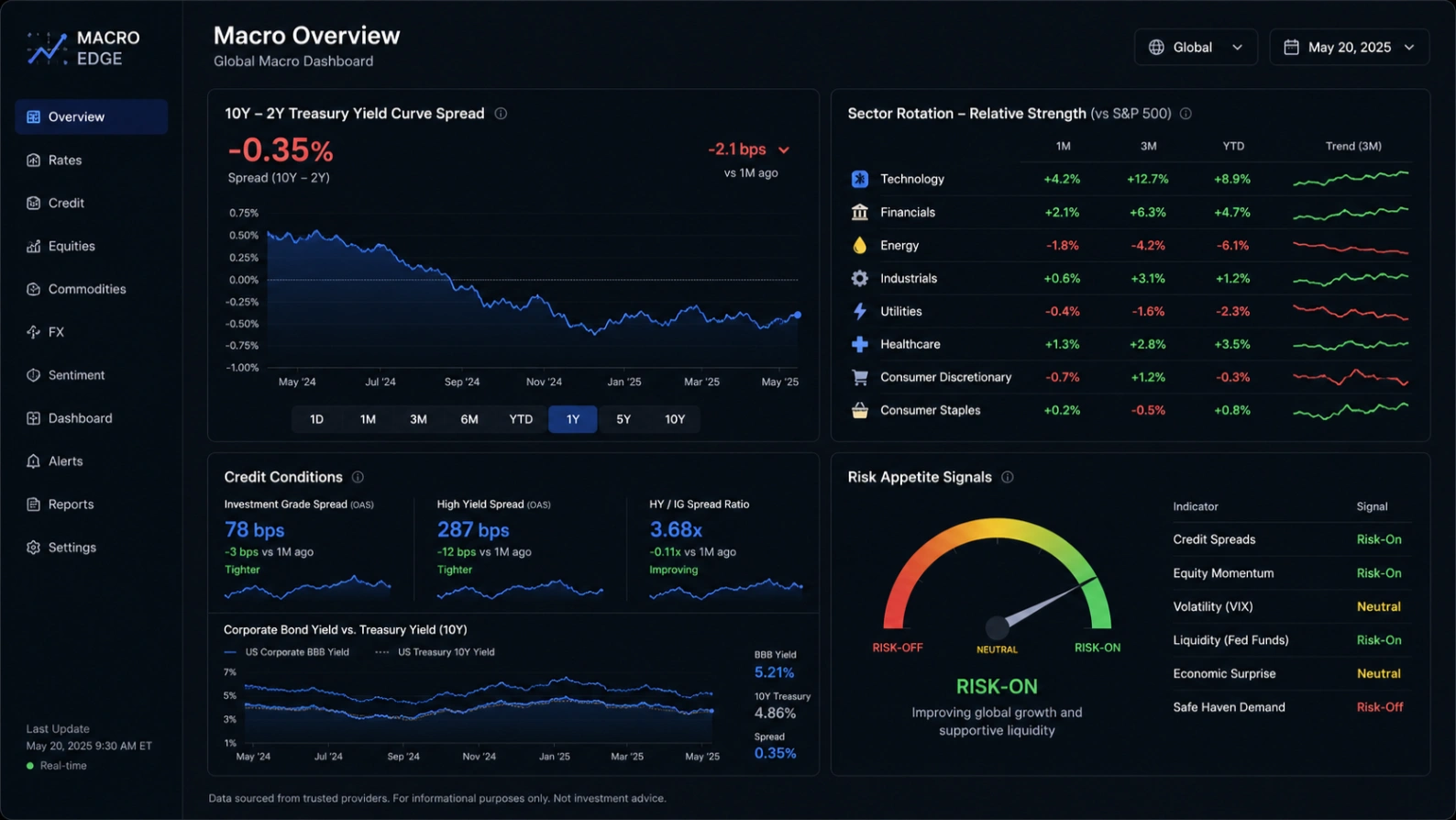
Defensive ETFs risk-off conditions analysis helps traders identify when capital rotates toward staples, utilities, health care, and safety.

IWM vs SPY small-cap risk appetite helps traders judge whether the market rally is broad, speculative, healthy, or dangerously narrow.

Commodity trading for macro traders means reading inflation, rates, the dollar, supply shocks, sector pressure, and technical structure before entering.

ATR in commodity trading helps traders size positions, place realistic stops, and adapt risk to fast-changing gold, oil, and energy volatility.

The Valeron framework for commodity market analysis combines macro regime, DXY, rates, inflation, related markets, technical structure, ATR, and risk.

Commodities risk-on risk-off behavior depends on whether price moves come from growth demand, inflation pressure, supply shocks, fear, or liquidity stress.