
Forex Trading Explained: What Actually Moves Currency Pairs

Forex trading explained through the real forces behind currency pairs: interest rates, inflation, growth, risk appetite, DXY, and technical execution.
How to Build a Forex Watchlist Using Macro Data

A forex watchlist using macro data helps traders rank currencies, select cleaner pairs, and avoid random signal-based trading.
How DXY Impacts Major Forex Pairs
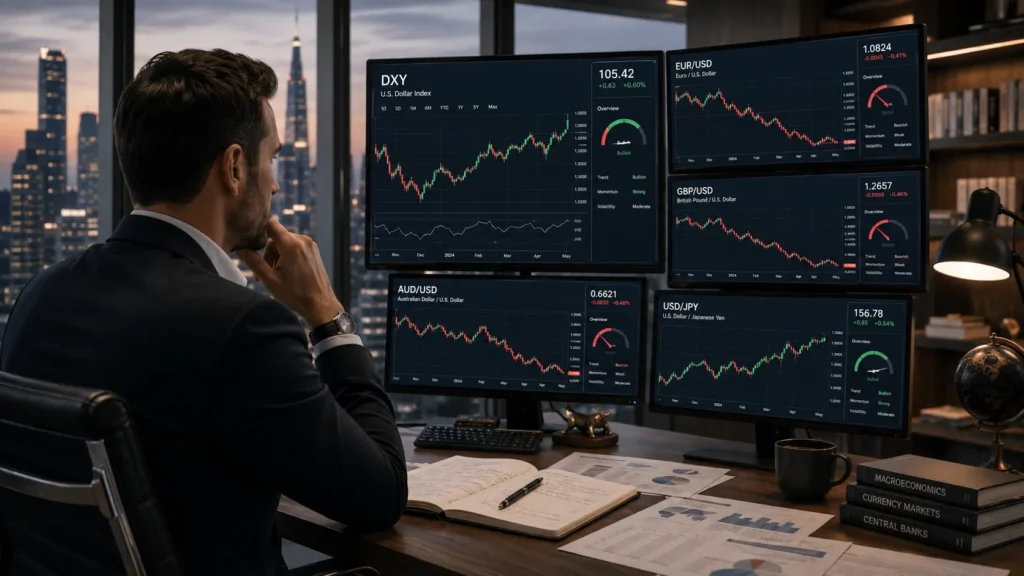
DXY impacts forex pairs by showing broad US dollar strength or weakness and helping traders filter major forex setups.
How to Trade Forex Without Chasing News Headlines

Trade forex without chasing news by using macro structure, currency strength, risk filters, and technical execution instead of headline reactions.
The Difference Between Technical and Macro Forex Trading

Technical and macro forex trading are different layers of one process: macro creates bias while technical analysis defines execution.
How to Use ATR for Forex Stop Loss and Position Size

ATR for forex stop loss helps traders place realistic stops, adjust position size, and respect volatility across different currency pairs.
The Valeron Approach to Forex: Macro Bias, Technical Execution
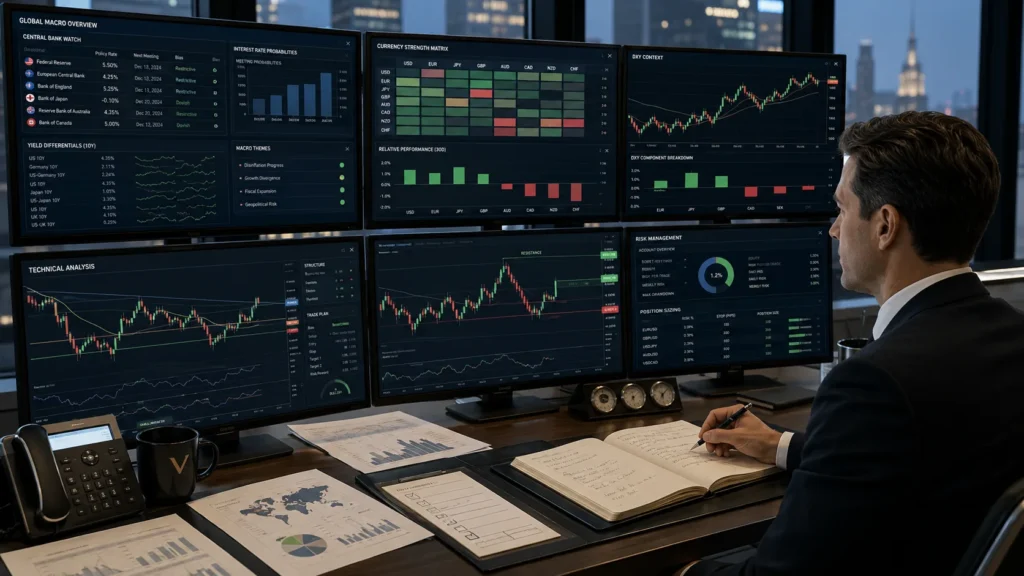
The Valeron approach to forex starts with macro bias, filters currency strength, waits for technical execution, and protects capital through risk control.
Why Currency Strength Is More Important Than Random Signals
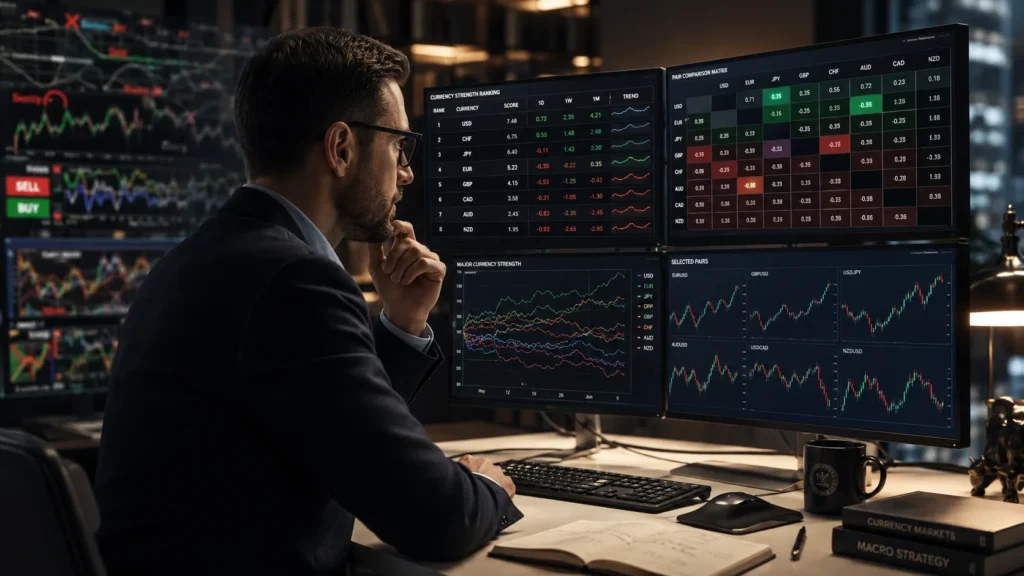
Currency strength matters more than random signals because forex trading is relative and clean opportunities come from strong versus weak currencies.
What Makes a Forex Pair Strong or Weak?

A forex pair strong or weak reading depends on relative currency strength, rates, macro conditions, risk appetite, and technical structure.
Why Interest Rates Matter So Much in Forex

Interest rates in forex matter because currency values respond to yield expectations, central-bank policy, inflation pressure, and capital flow.