
How Defensive ETFs Signal Risk-Off Conditions

Defensive ETFs risk-off conditions analysis helps traders identify when capital rotates toward staples, utilities, health care, and safety.
ETF Trading Explained: A Smarter Way to Read the Market
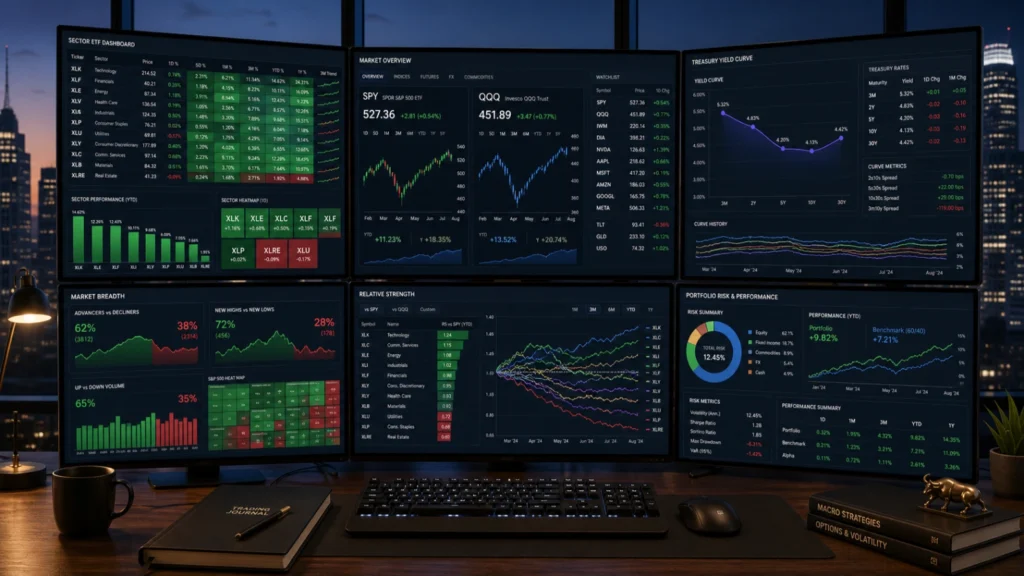
ETF trading explained for serious traders: use ETFs to read market leadership, sector rotation, risk appetite, and technical structure.
How to Use ETF Ratios to Understand Market Leadership

ETF ratios market leadership analysis helps traders compare sectors, risk appetite, growth, defense, and market strength with cleaner evidence.
How Sector ETFs Reveal Institutional Rotation

Sector ETFs reveal institutional rotation by showing which market groups attract capital, lose leadership, or shift into defensive behavior.
How to Use XLF, XLK, XLE, and XLV for Sector Analysis

XLF, XLK, XLE, and XLV help traders analyze financials, technology, energy, and health care leadership inside the market.
Sector Rotation Trading With ETFs: A Practical Guide
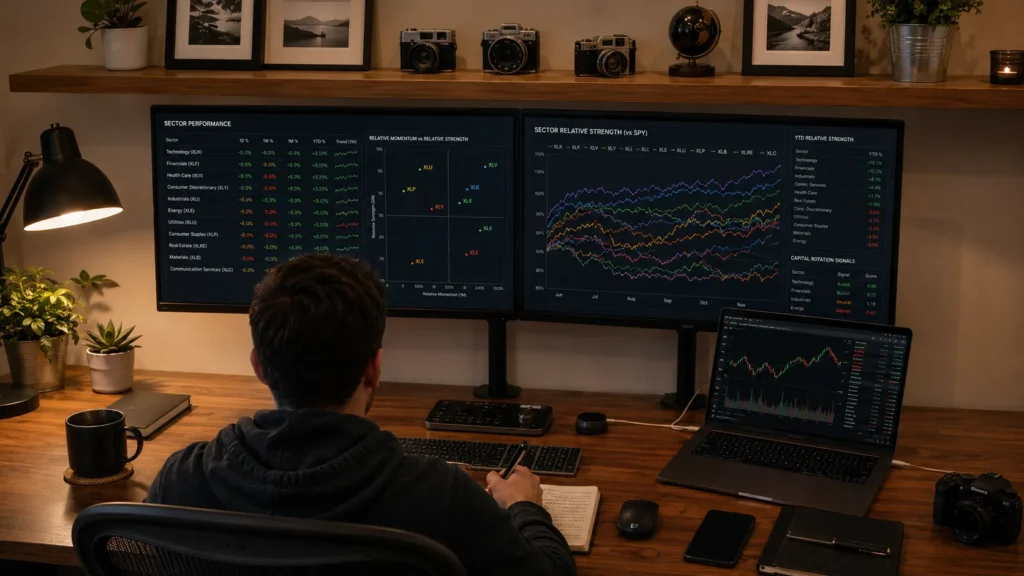
Sector rotation trading with ETFs helps traders follow capital flow, identify leadership, avoid weak sectors, and time entries with structure.
How Valeron Uses ETFs to Build Market Context

Valeron uses ETFs to build market context by tracking benchmarks, sectors, ratios, defensive rotation, small-cap appetite, and technical structure.
SPY, QQQ, IWM, DIA: What Each ETF Tells Traders

SPY, QQQ, IWM, DIA each tell traders something different about broad market strength, growth appetite, small-cap risk, and blue-chip exposure.
Why ETF Relative Strength Matters More Than Opinions

ETF relative strength matters more than opinions because it shows where capital is actually outperforming instead of where traders hope it will go.
Why IWM vs SPY Shows Small-Cap Risk Appetite

IWM vs SPY small-cap risk appetite helps traders judge whether the market rally is broad, speculative, healthy, or dangerously narrow.