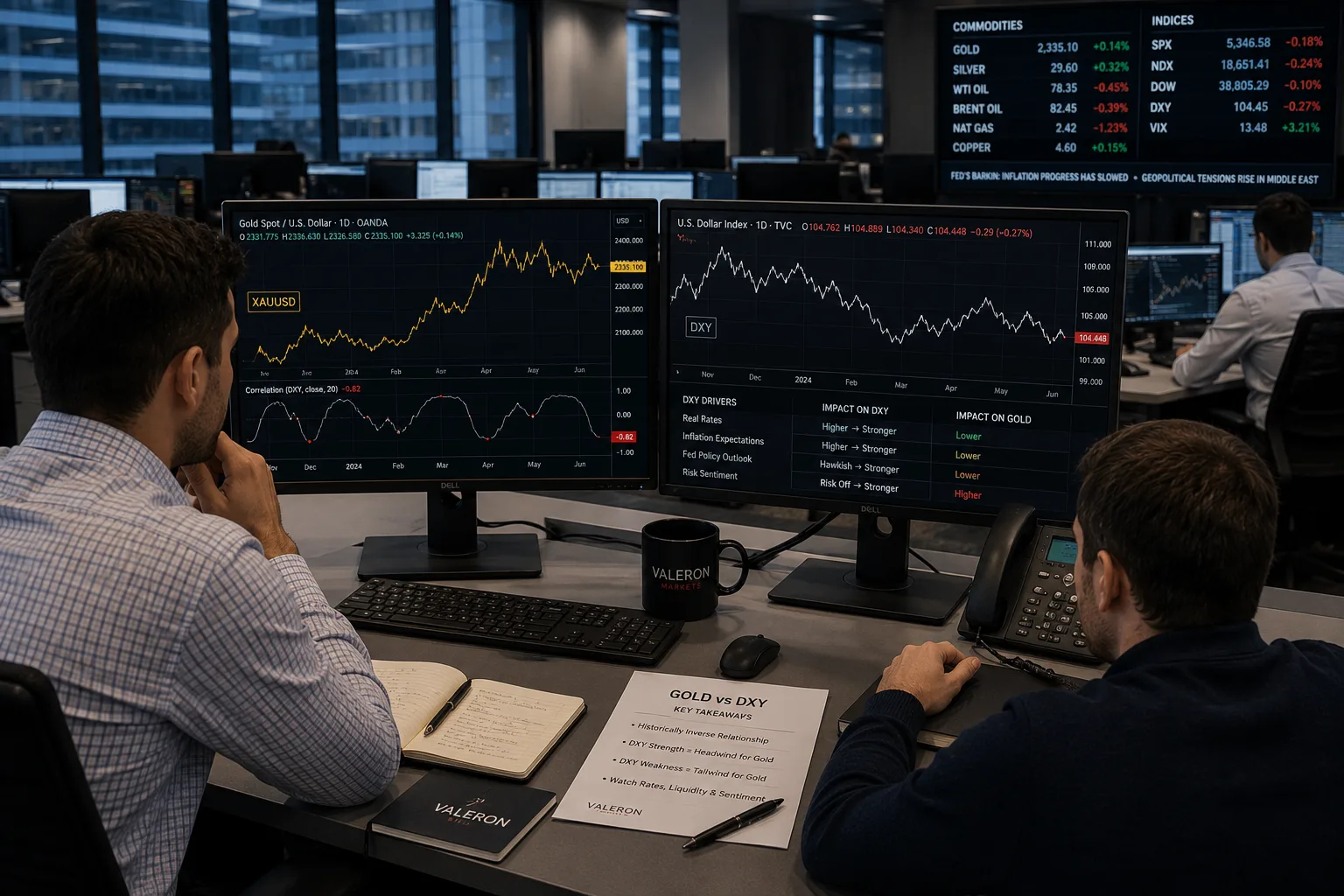
Gold vs DXY: What Traders Need to Understand
Gold vs DXY helps traders understand how dollar strength, real rates, fear, and technical structure affect gold trades.

Gold vs DXY helps traders understand how dollar strength, real rates, fear, and technical structure affect gold trades.
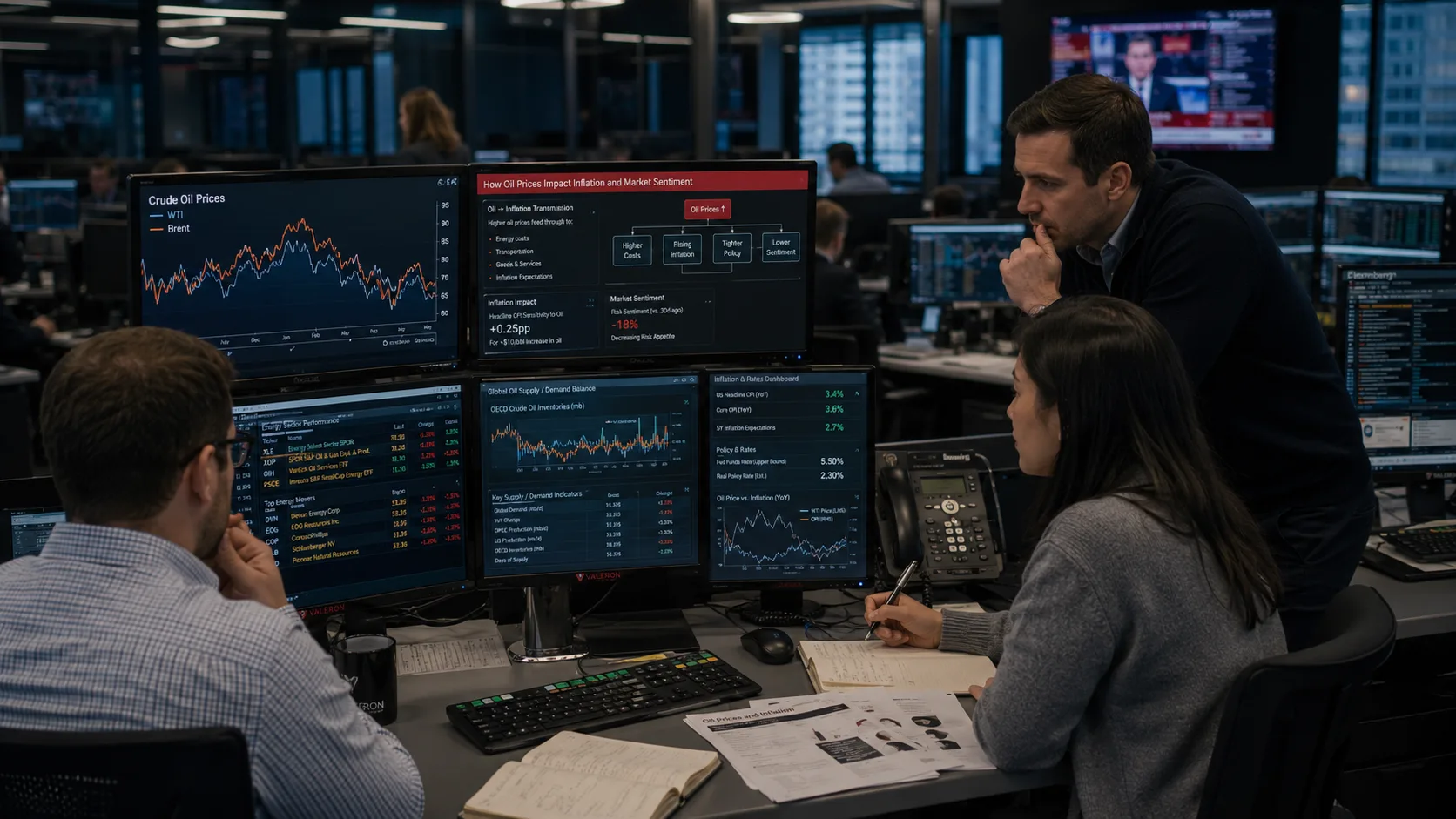
Oil prices impact inflation and market sentiment through energy costs, consumer pressure, margins, central-bank expectations, and risk appetite.

Energy stocks and oil prices are related, but traders must also consider margins, sector flows, equity risk, rates, and technical confirmation.

The Valeron framework for commodity market analysis combines macro regime, DXY, rates, inflation, related markets, technical structure, ATR, and risk.

Commodities risk-on risk-off behavior depends on whether price moves come from growth demand, inflation pressure, supply shocks, fear, or liquidity stress.
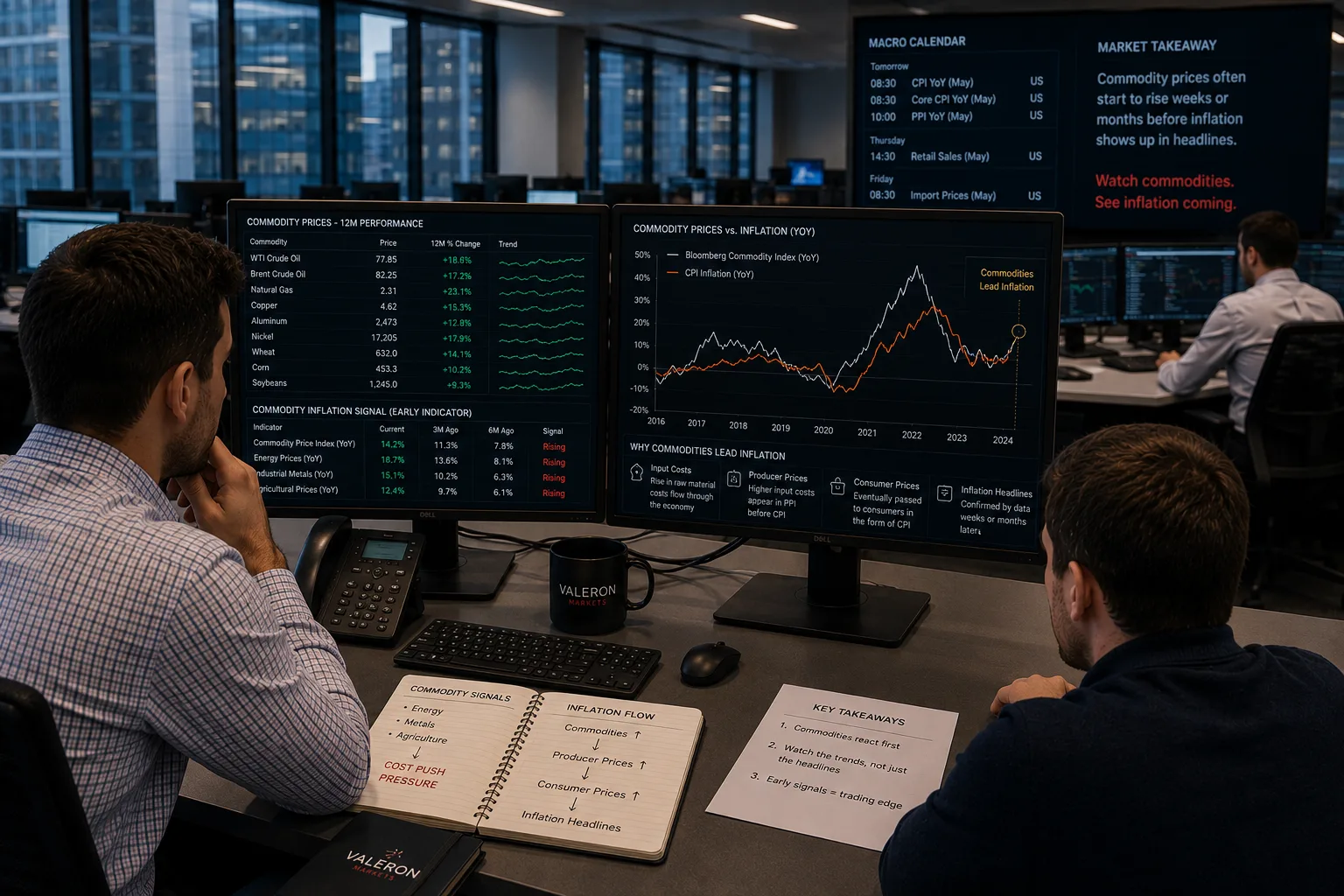
Commodities signal inflation pressure before headlines because oil, metals, food, and energy costs often move before official reports confirm the trend.
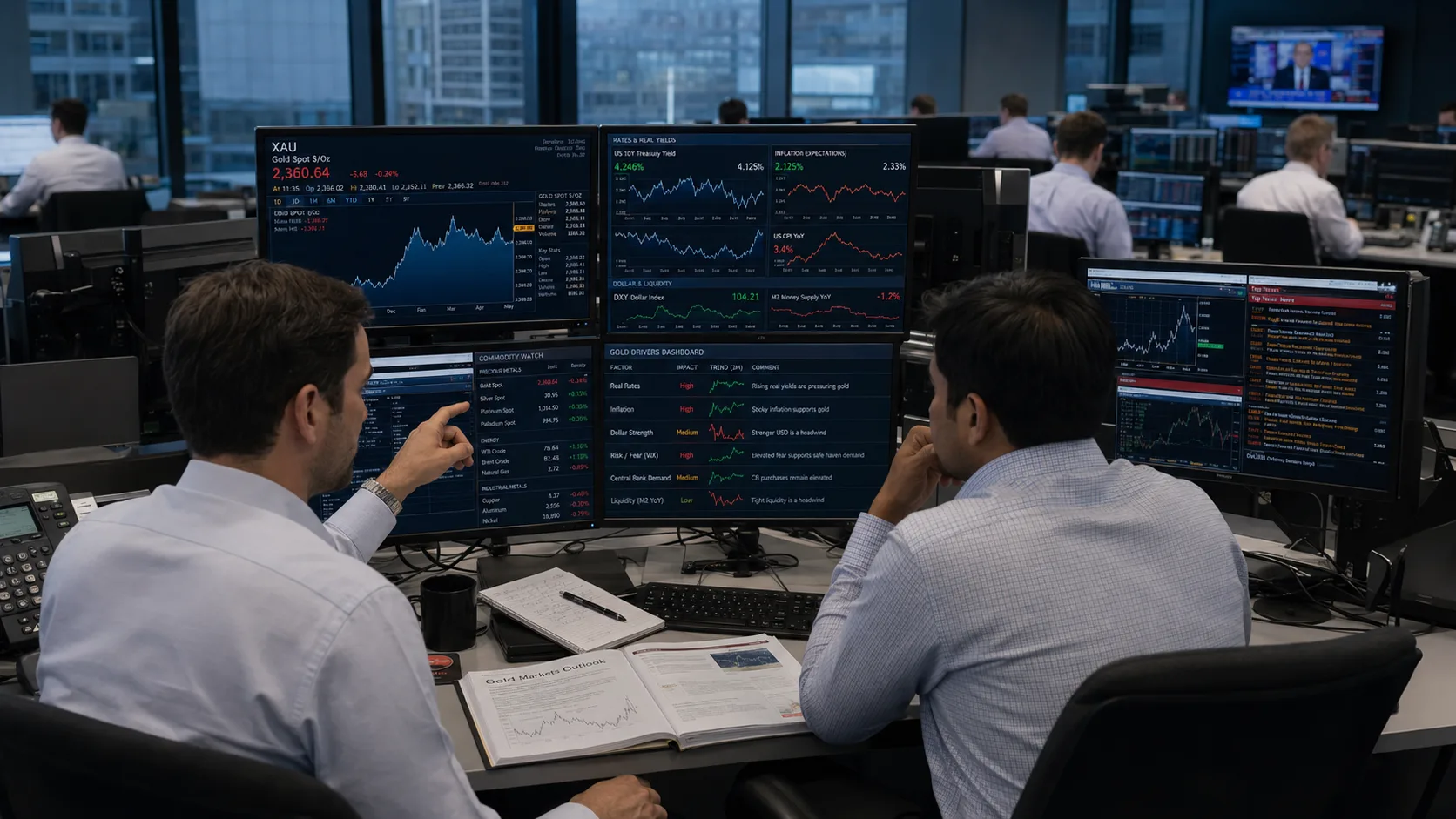
Why gold moves depends on real rates, inflation expectations, DXY, financial stress, fear, and technical momentum.
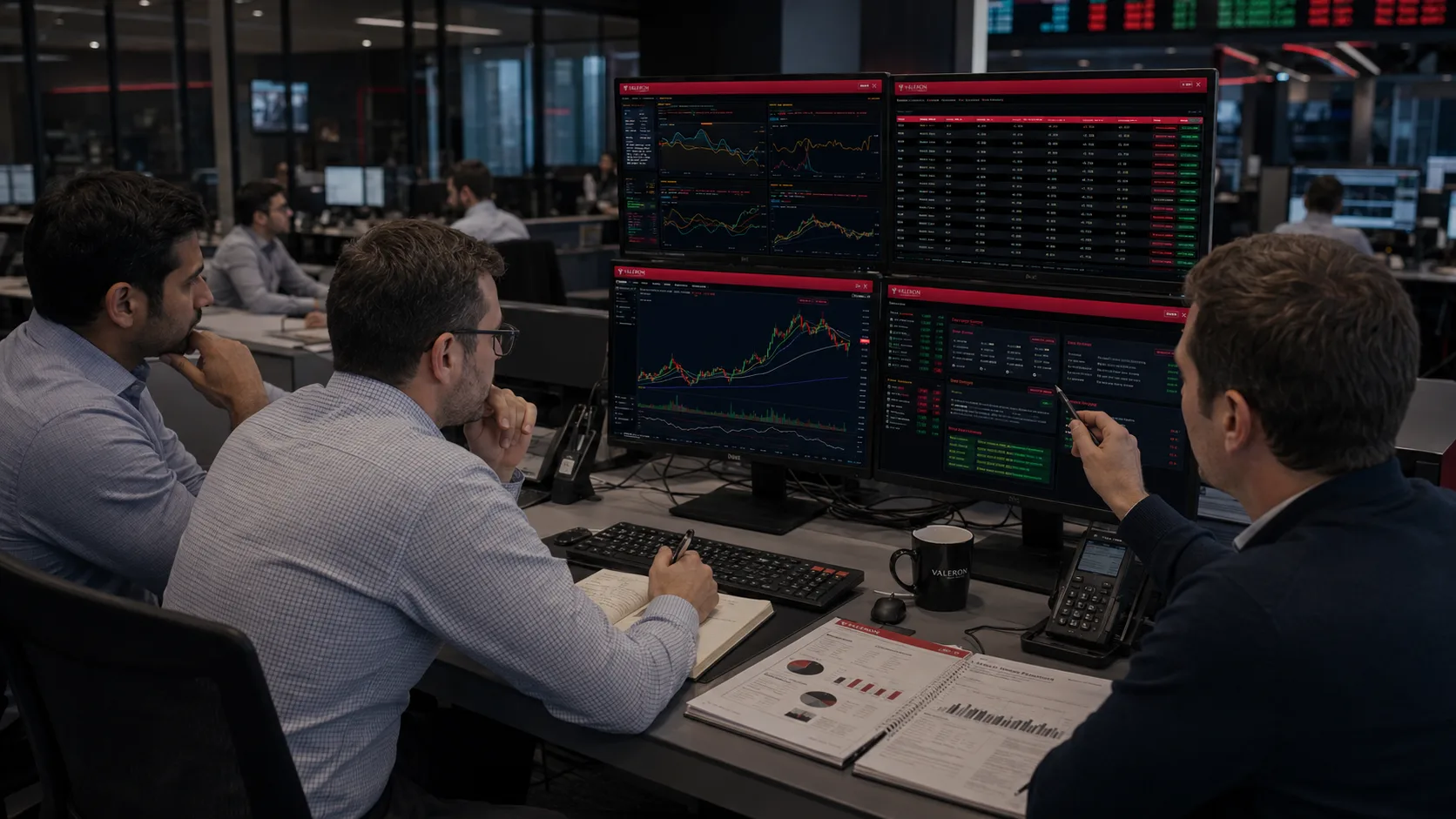
The Valeron framework for stock trade selection combines macro context, sector strength, relative performance, technical structure, volume, and risk.
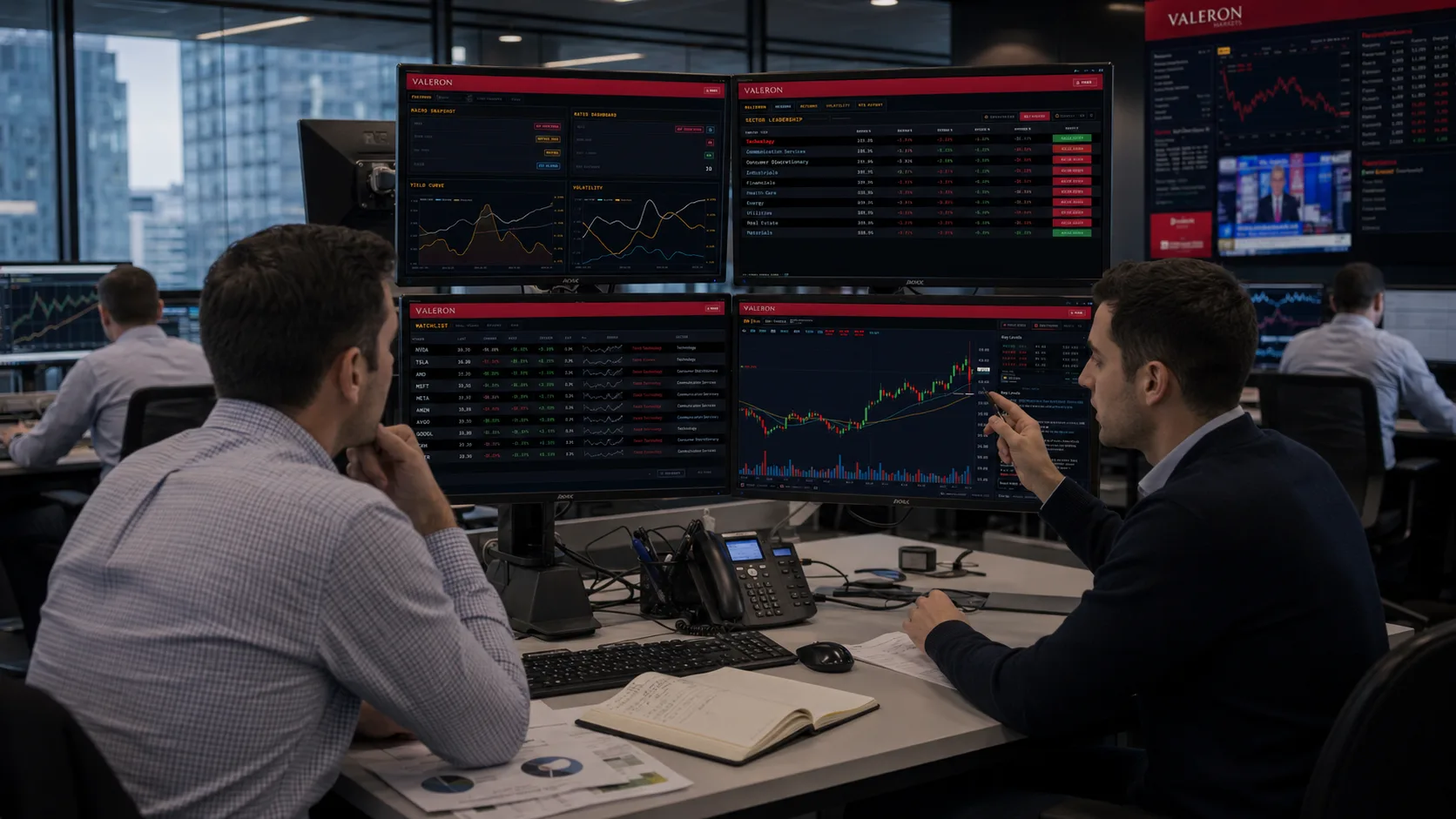
Before buying growth stocks, traders should watch rates, macro conditions, sector strength, valuation pressure, momentum, volume, and risk.

Strong stocks can still collapse in bad macro conditions when rates rise, liquidity tightens, sector leadership breaks, or risk appetite disappears.