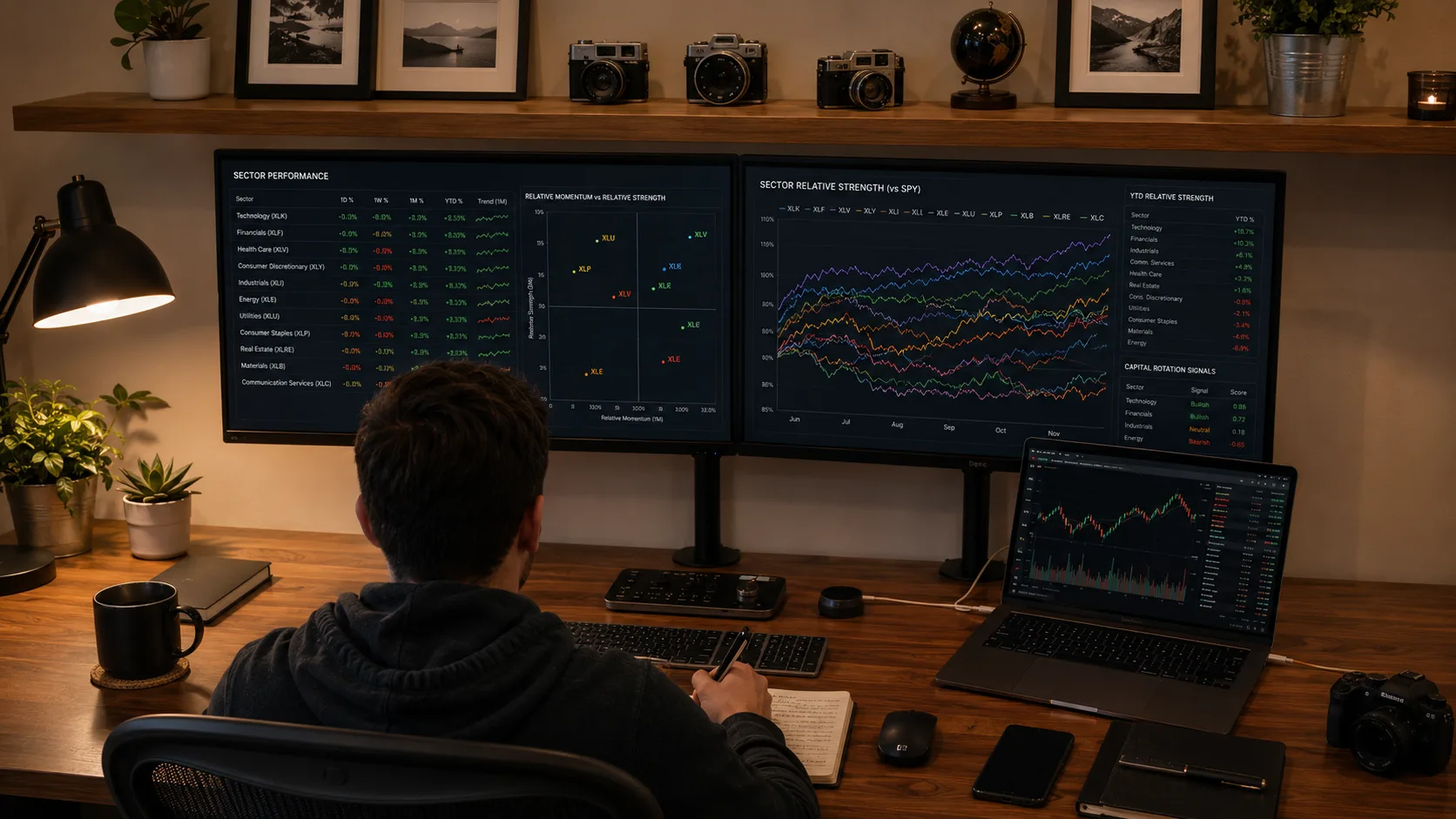
Sector Rotation Trading With ETFs: A Practical Guide
Sector rotation trading with ETFs helps traders follow capital flow, identify leadership, avoid weak sectors, and time entries with structure.

Sector rotation trading with ETFs helps traders follow capital flow, identify leadership, avoid weak sectors, and time entries with structure.
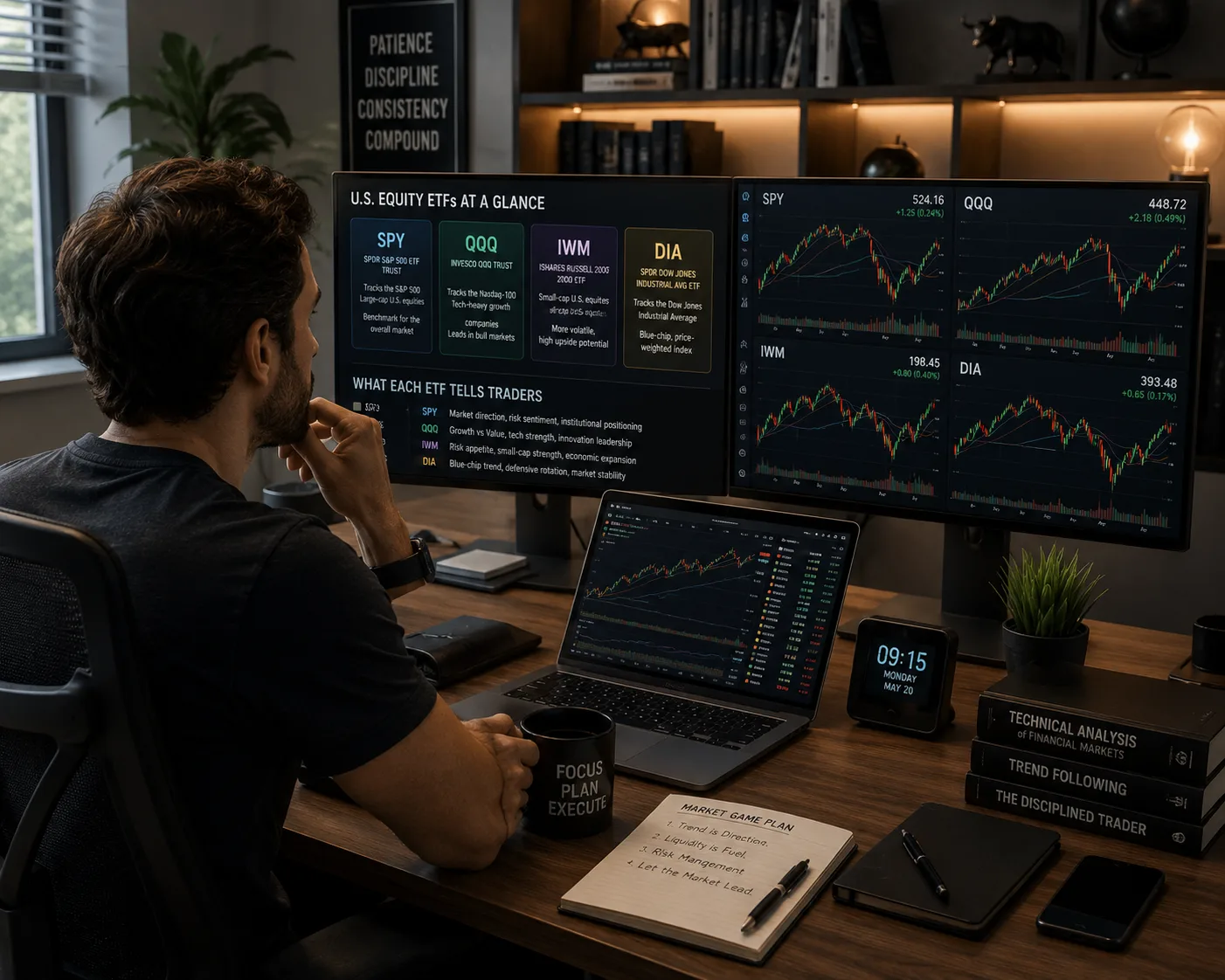
SPY, QQQ, IWM, DIA each tell traders something different about broad market strength, growth appetite, small-cap risk, and blue-chip exposure.

ETF relative strength matters more than opinions because it shows where capital is actually outperforming instead of where traders hope it will go.
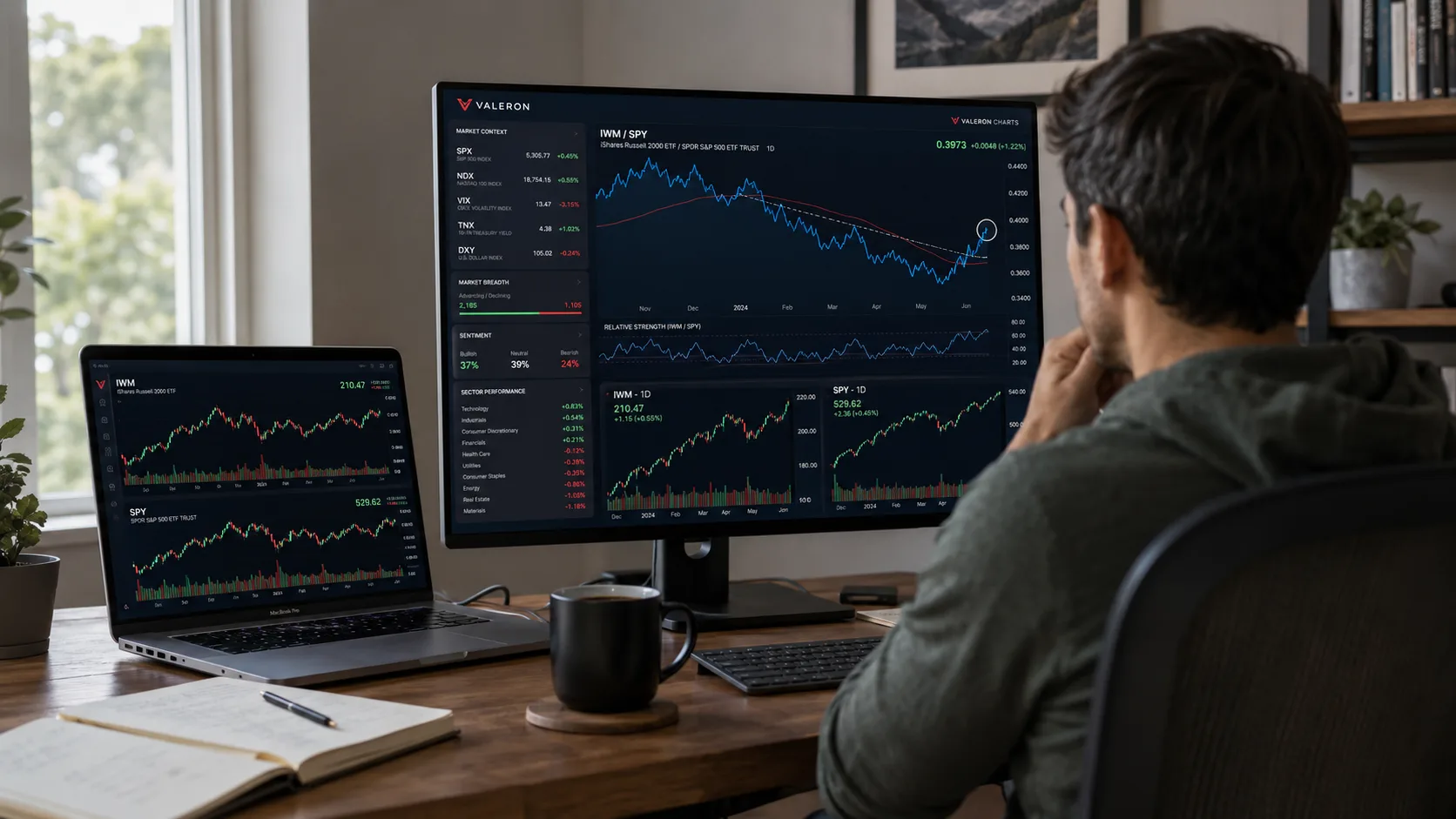
IWM vs SPY small-cap risk appetite helps traders judge whether the market rally is broad, speculative, healthy, or dangerously narrow.

Oil prices impact inflation and market sentiment through energy costs, consumer pressure, margins, central-bank expectations, and risk appetite.

Energy stocks and oil prices are related, but traders must also consider margins, sector flows, equity risk, rates, and technical confirmation.

Commodities risk-on risk-off behavior depends on whether price moves come from growth demand, inflation pressure, supply shocks, fear, or liquidity stress.

Commodities signal inflation pressure before headlines because oil, metals, food, and energy costs often move before official reports confirm the trend.
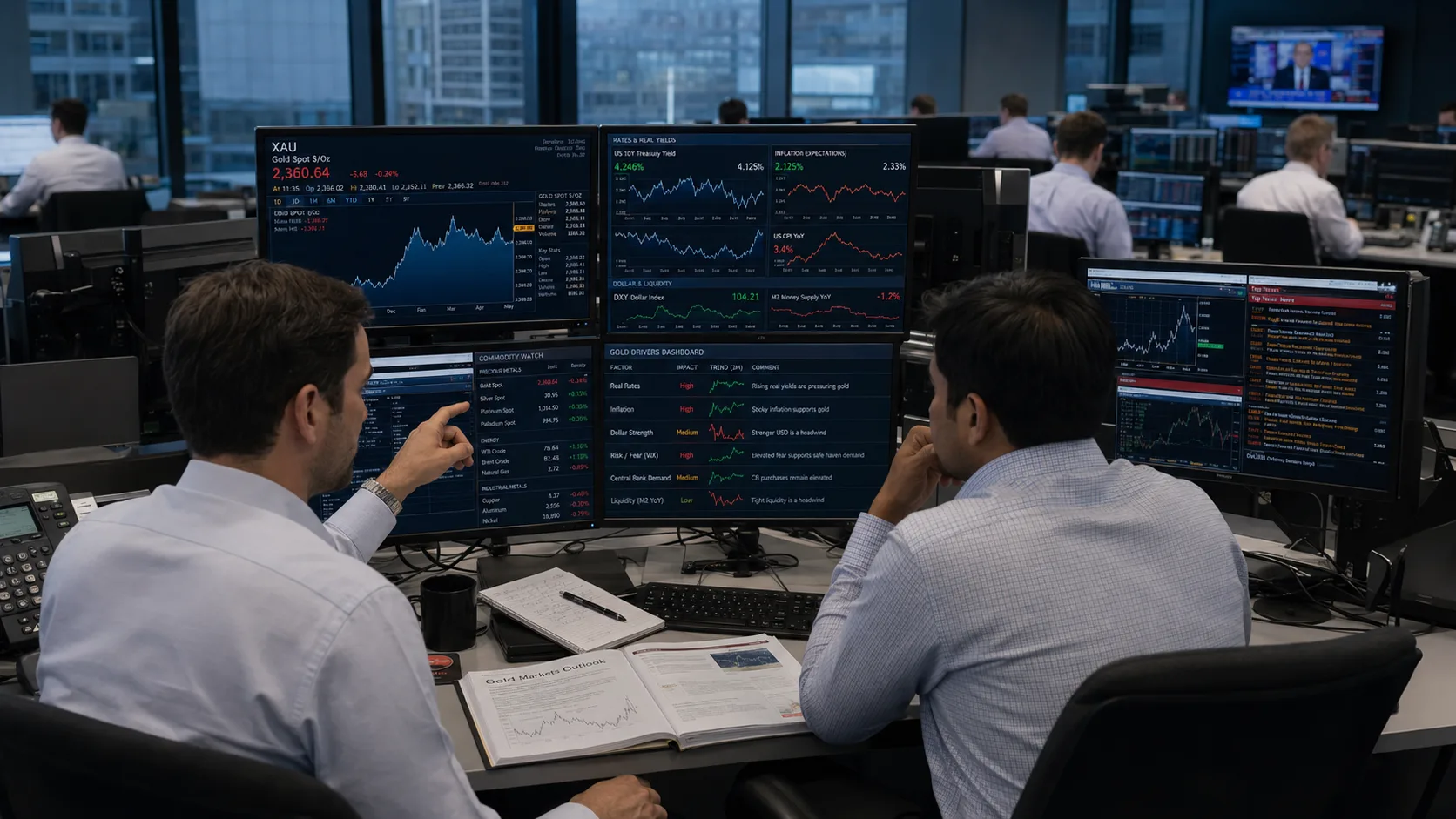
Why gold moves depends on real rates, inflation expectations, DXY, financial stress, fear, and technical momentum.

Sector strength helps find better stock trades by showing where capital is flowing before traders select individual names and technical entries.