
Forex Trading Explained: What Actually Moves Currency Pairs

Forex trading explained through the real forces behind currency pairs: interest rates, inflation, growth, risk appetite, DXY, and technical execution.
How to Build a Forex Watchlist Using Macro Data
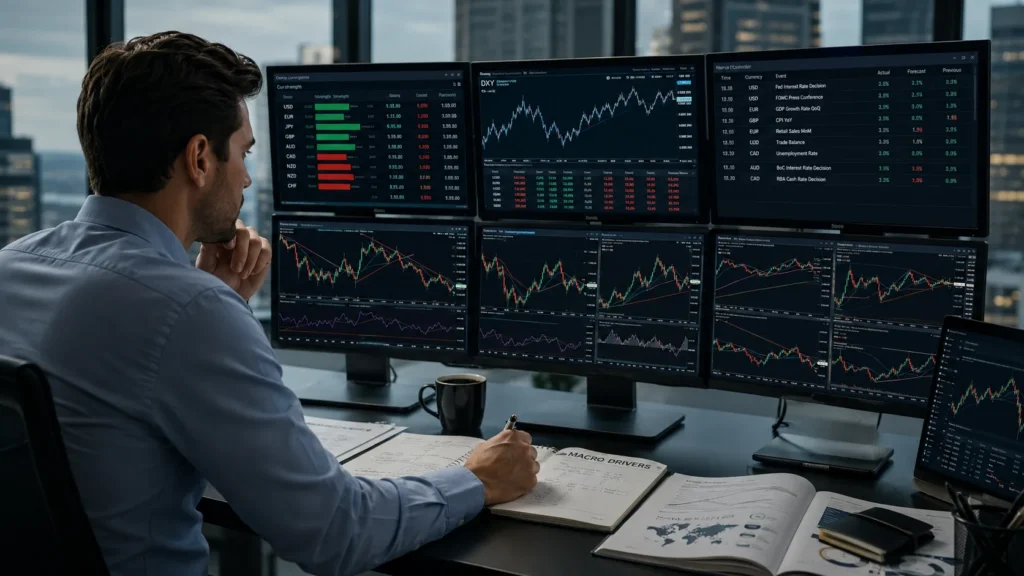
A forex watchlist using macro data helps traders rank currencies, select cleaner pairs, and avoid random signal-based trading.
How Valeron Reads Credit Risk Through HYG and LQD
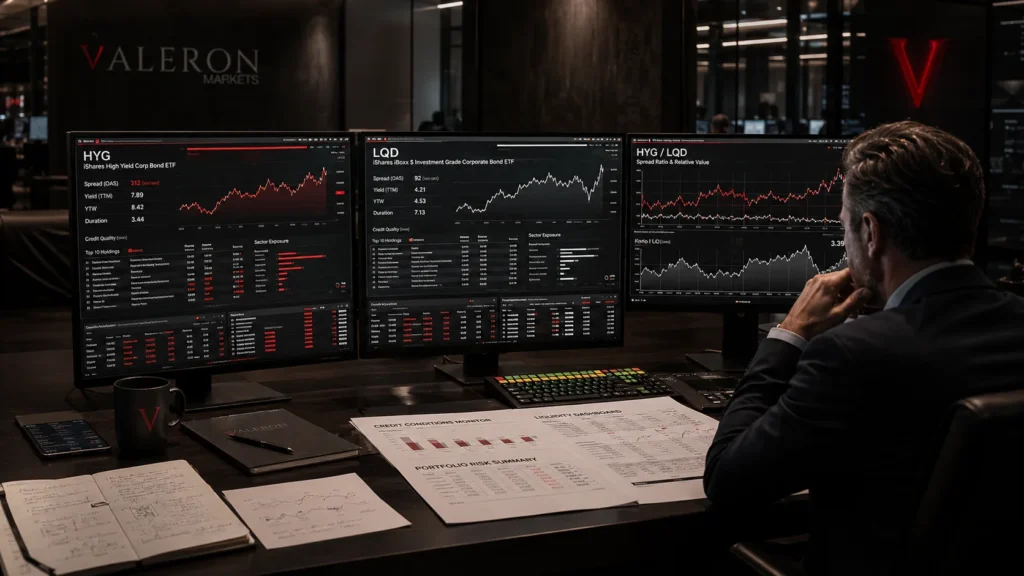
Valeron reads credit risk through HYG and LQD by comparing high-yield appetite against investment-grade safety and market stress.
How We Combine Macro Data With Technical Execution

Combining macro data with technical execution helps traders align market context, sector leadership, timing, volume, stops, and position size.
The Valeron Market Framework: Macro, Sector, Technicals, Risk
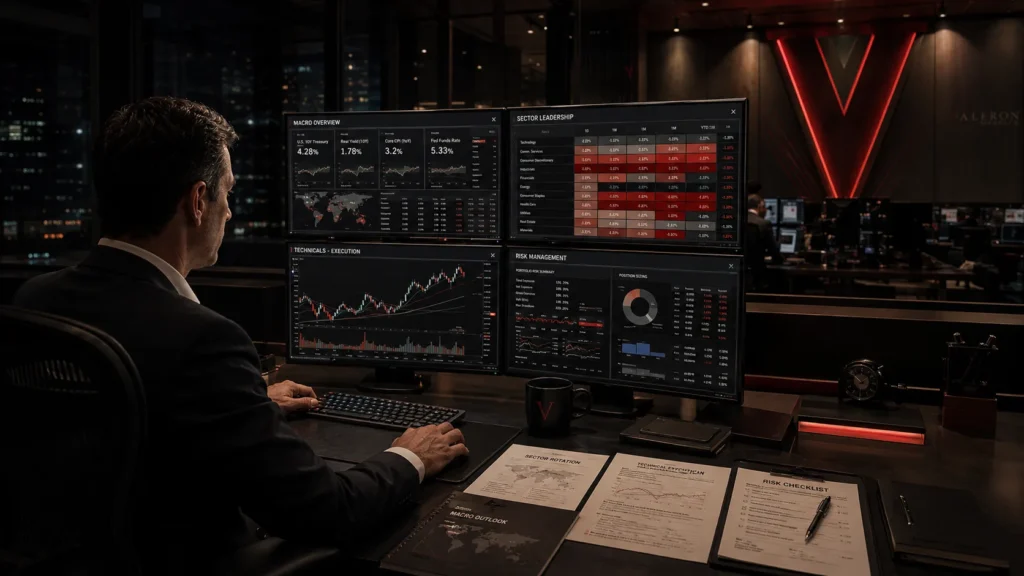
The Valeron Market Framework combines macro context, sector leadership, technical execution, and risk control into one trading process.
The Valeron Thesis: Markets Are Efficiently Inefficient
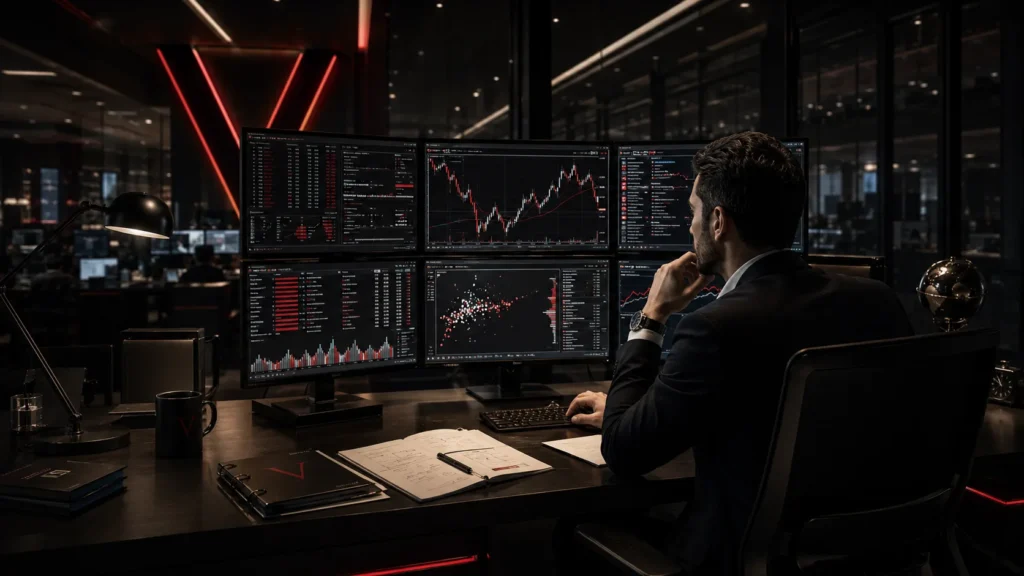
Efficiently inefficient markets create opportunity because prices process information quickly but still leave exploitable gaps in behavior and structure.
How to Build a Watchlist Based on Macro and Sector Strength

A watchlist based on macro and sector strength helps investors focus on leading parts of the market instead of random charts.
How to Use Interest Rates to Understand Market Risk
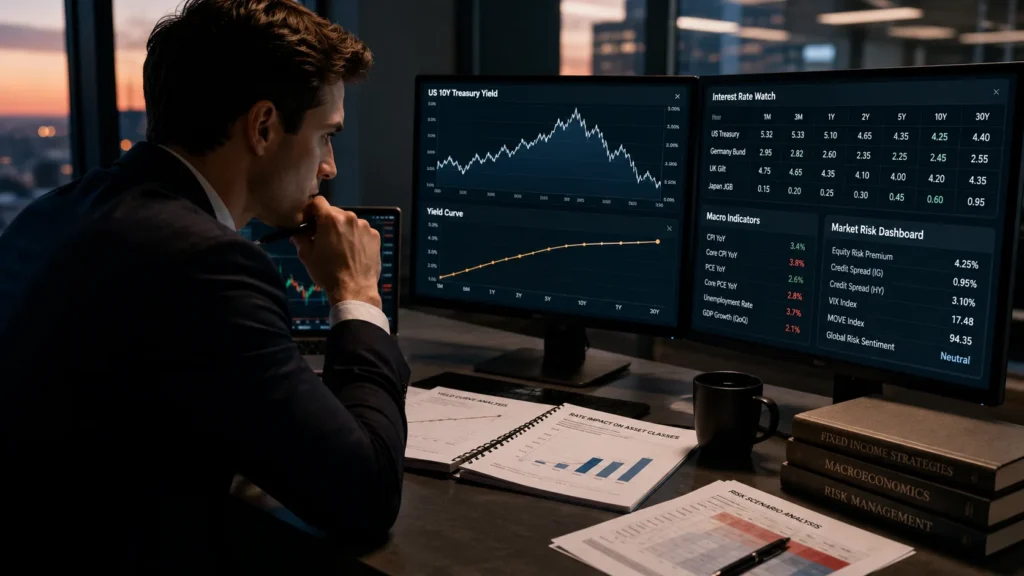
Interest rates market risk analysis helps investors understand valuation pressure, sector behavior, and the broader tone of capital markets.
Why Macro Conditions Matter for Stock Market Investors

Macro conditions matter because interest rates, inflation, credit, liquidity, and risk appetite shape how stocks and sectors behave.
Trading Is Not Prediction: It Is Structured Decision-Making

Structured decision-making in trading helps traders replace prediction with context, risk control, technical timing, and discipline.