
How to Trade Commodities With Technical and Macro Context
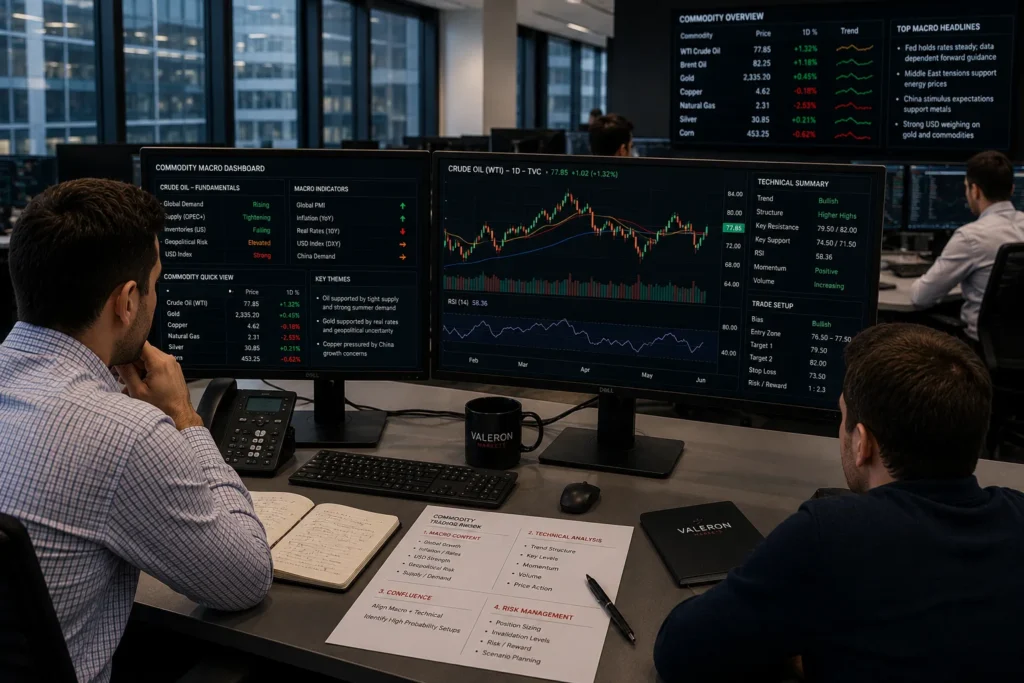
Trade commodities with technical and macro context by combining inflation, DXY, rates, supply-demand pressure, chart structure, ATR, and risk control.
Commodity Trading Explained for Macro-Minded Traders

Commodity trading for macro traders means reading inflation, rates, the dollar, supply shocks, sector pressure, and technical structure before entering.
How ATR Helps Manage Risk in Commodity Trading
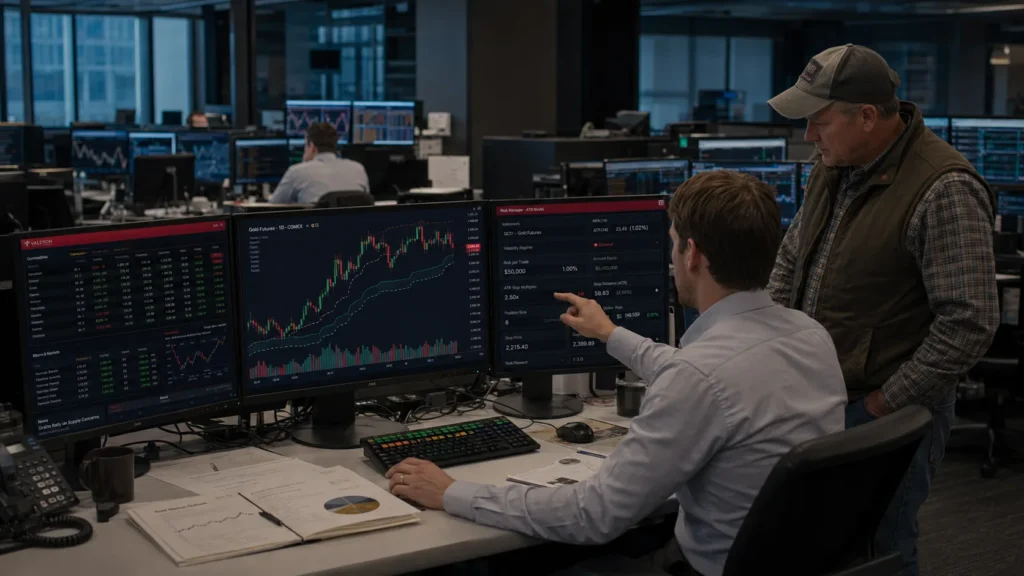
ATR in commodity trading helps traders size positions, place realistic stops, and adapt risk to fast-changing gold, oil, and energy volatility.
How Oil Prices Impact Inflation and Market Sentiment
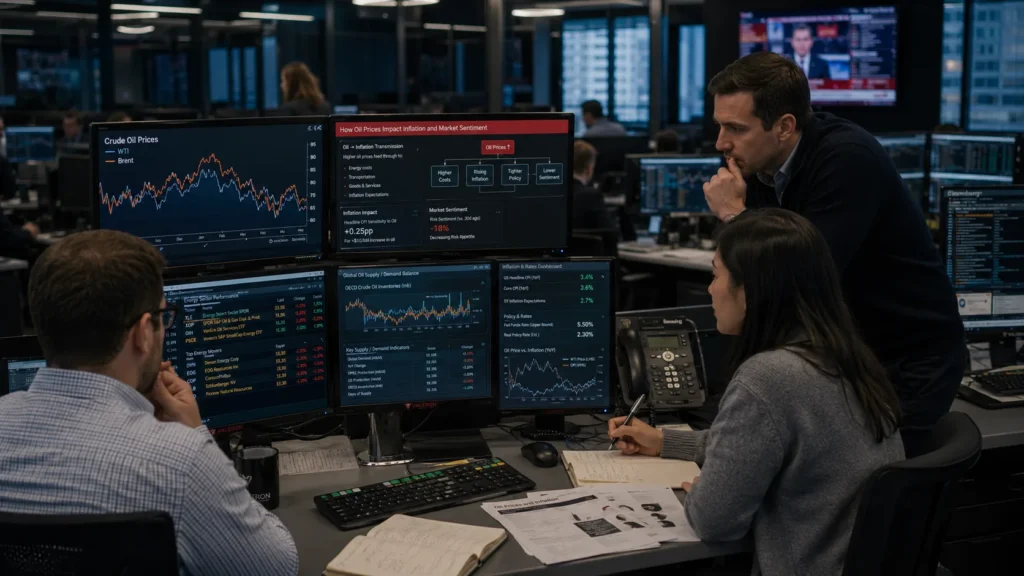
Oil prices impact inflation and market sentiment through energy costs, consumer pressure, margins, central-bank expectations, and risk appetite.
The Relationship Between Energy Stocks and Oil Prices
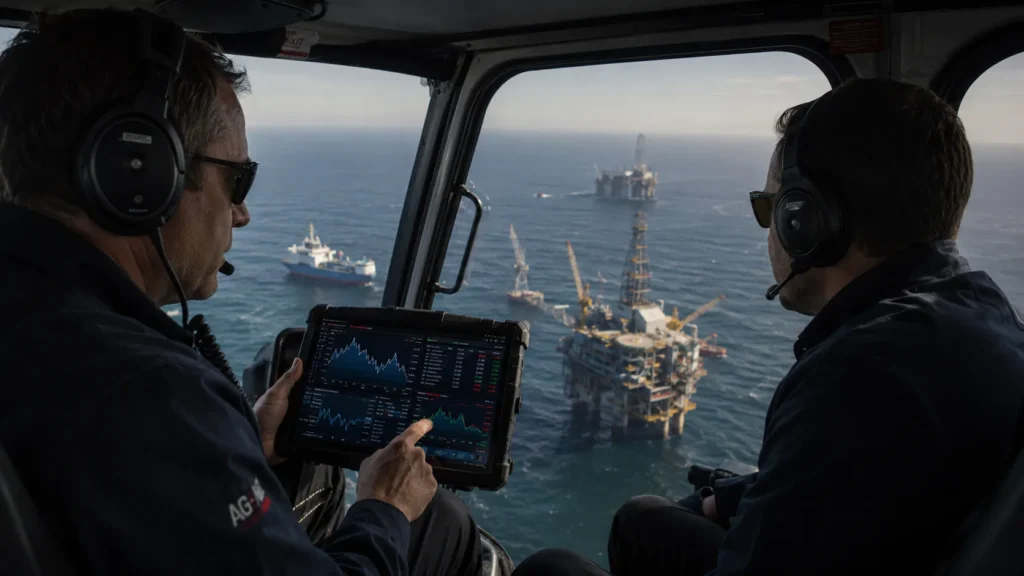
Energy stocks and oil prices are related, but traders must also consider margins, sector flows, equity risk, rates, and technical confirmation.
The Valeron Framework for Commodity Market Analysis
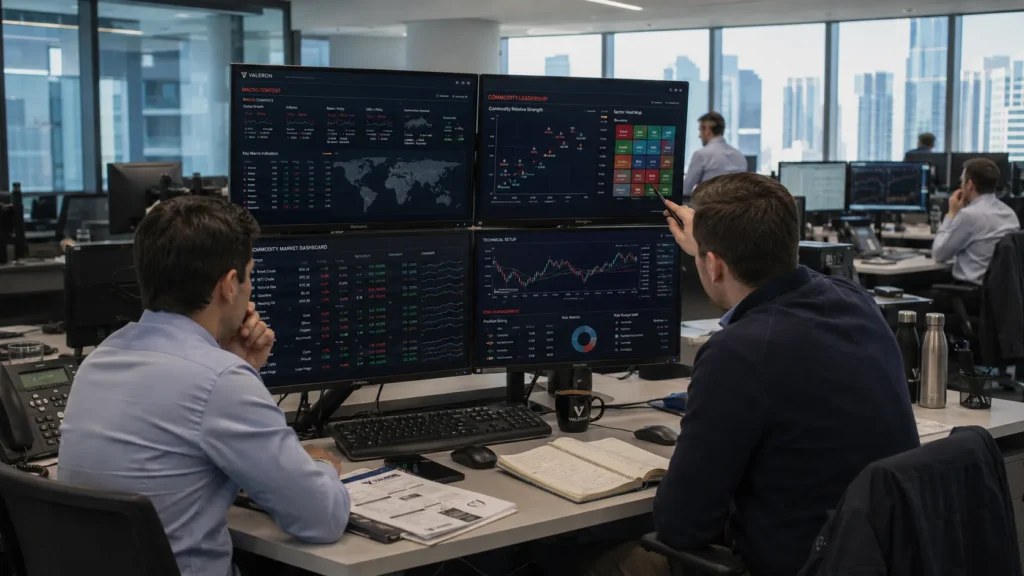
The Valeron framework for commodity market analysis combines macro regime, DXY, rates, inflation, related markets, technical structure, ATR, and risk.
When Commodities Become Risk-On or Risk-Off Assets
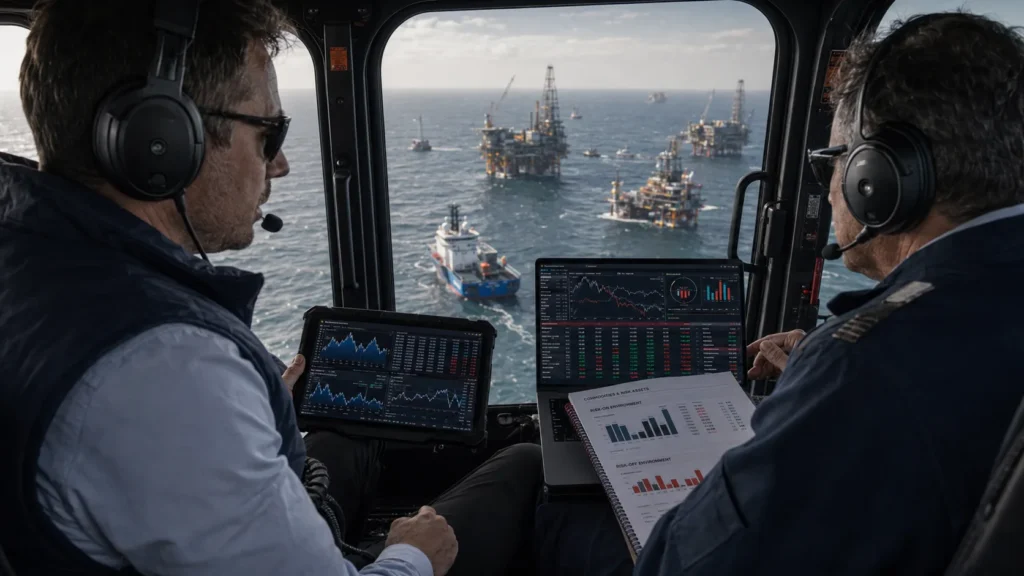
Commodities risk-on risk-off behavior depends on whether price moves come from growth demand, inflation pressure, supply shocks, fear, or liquidity stress.
Why Commodities Can Signal Inflation Pressure Before Headlines
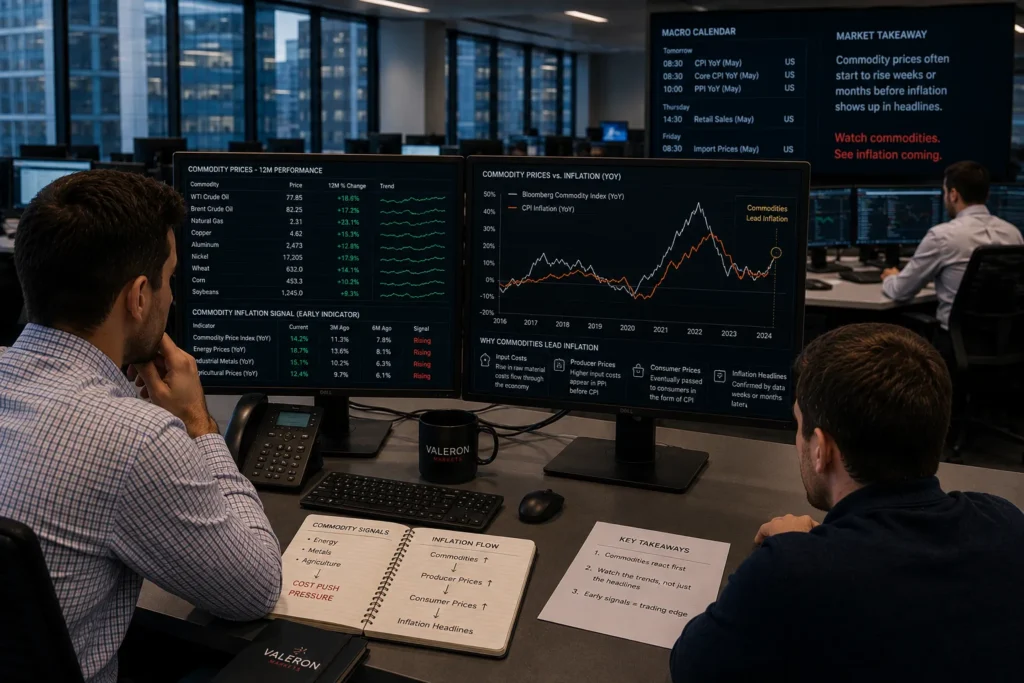
Commodities signal inflation pressure before headlines because oil, metals, food, and energy costs often move before official reports confirm the trend.