
How ATR Helps Manage Risk in Commodity Trading

ATR in commodity trading helps traders size positions, place realistic stops, and adapt risk to fast-changing gold, oil, and energy volatility.
How Prop Trading Really Works for Retail Traders

Prop trading for retail traders can improve capital efficiency for small accounts when risk rules and position sizing come first.
How to Avoid Overleveraging in Prop Firm Trading

Avoid overleveraging by sizing from drawdown limits, controlling correlated exposure, and treating leverage as a tool.
How to Build a Prop Firm Trading Plan With Real Risk Control

A funded trading plan needs real risk control, including daily stops, drawdown math, position sizing, strategy rules, and review.
How to Trade a Prop Firm Account Without Gambling

Trade a funded account without gambling by using small risk, daily stops, clear setups, and a business-first execution plan.
The Risk Rules That Matter Most in Funded Trading

Funded trading risk rules matter because daily drawdown, maximum loss, correlation, leverage, and position sizing decide survival.
Why Low Risk Per Trade Is Smarter in Prop Firm Challenges

Low risk per trade gives evaluation traders more survival time, better drawdown control, and a cleaner path toward consistency.
Why Good Traders Care More About Risk Than Accuracy

Good traders care more about risk than accuracy because capital survives through position sizing, drawdown control, and discipline.
Why Most Traders Lose Before They Even Enter the Market

Why most traders lose often starts before entry, through weak preparation, no market context, emotional decisions, and poor risk planning.
ATR Explained: How Volatility Defines Risk and Position Size
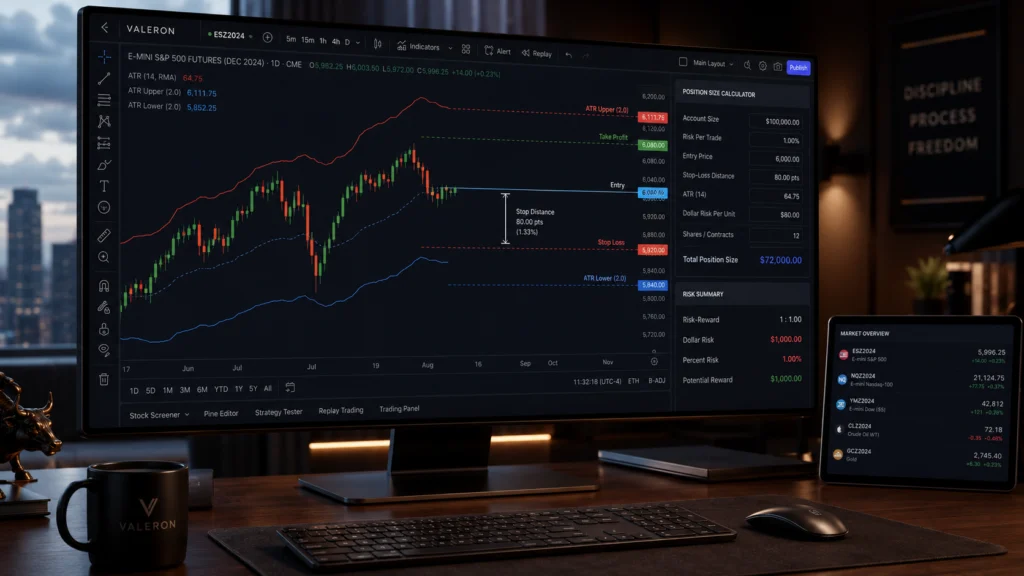
ATR explained for traders who want better stops, smarter position sizing, cleaner risk control, and volatility-based execution.