
How to Build a Watchlist Using Data Instead of Emotion

How to Build a Watchlist Using Data Instead of Emotion explains how traders can use tools, data, dashboards, risk controls, and process to make cleaner market decisions.
How to Use ETF Ratios to Understand Market Leadership

ETF ratios market leadership analysis helps traders compare sectors, risk appetite, growth, defense, and market strength with cleaner evidence.
How Valeron Uses ETFs to Build Market Context
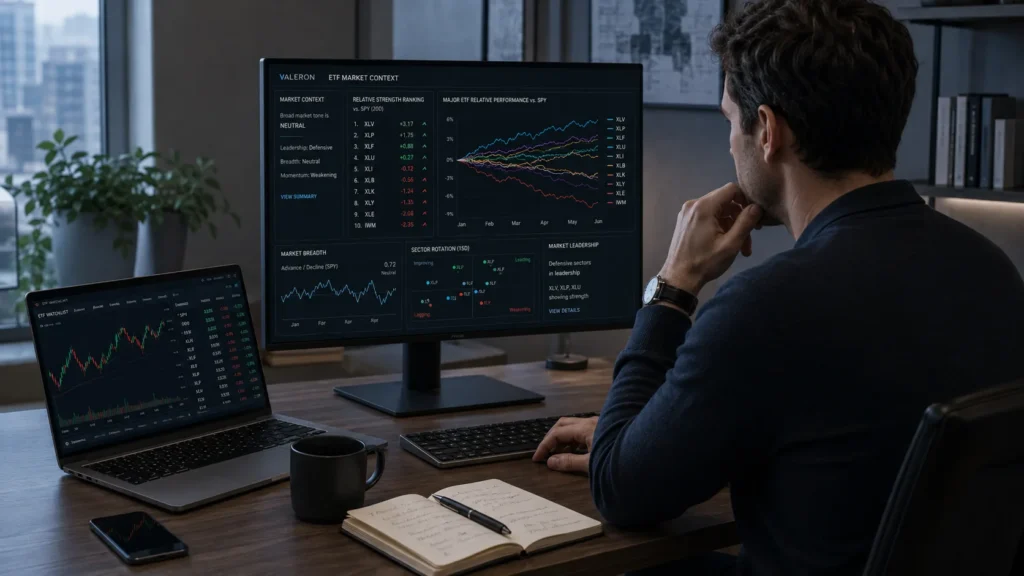
Valeron uses ETFs to build market context by tracking benchmarks, sectors, ratios, defensive rotation, small-cap appetite, and technical structure.
Sector Rotation Trading With ETFs: A Practical Guide
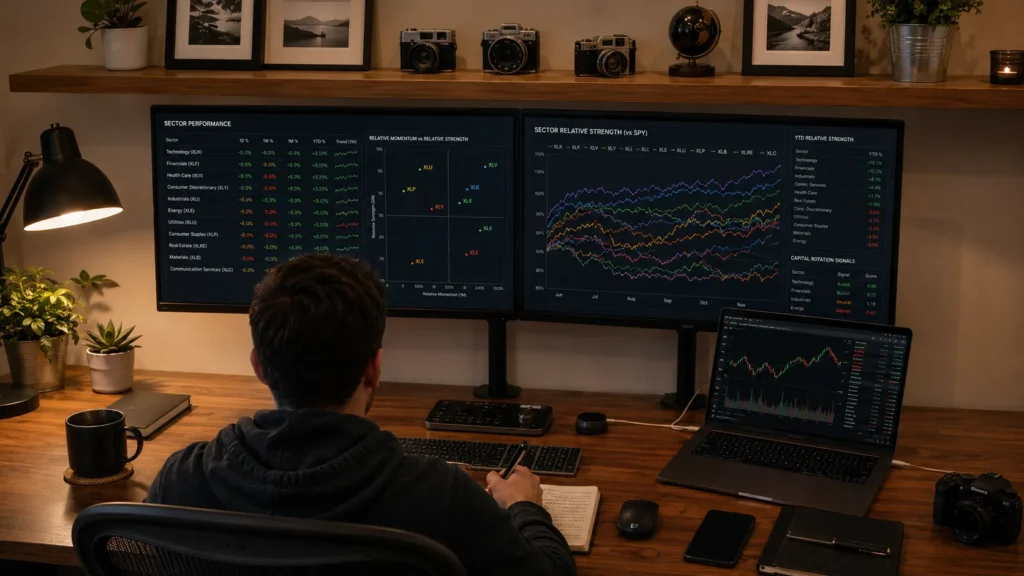
Sector rotation trading with ETFs helps traders follow capital flow, identify leadership, avoid weak sectors, and time entries with structure.
Why ETF Relative Strength Matters More Than Opinions
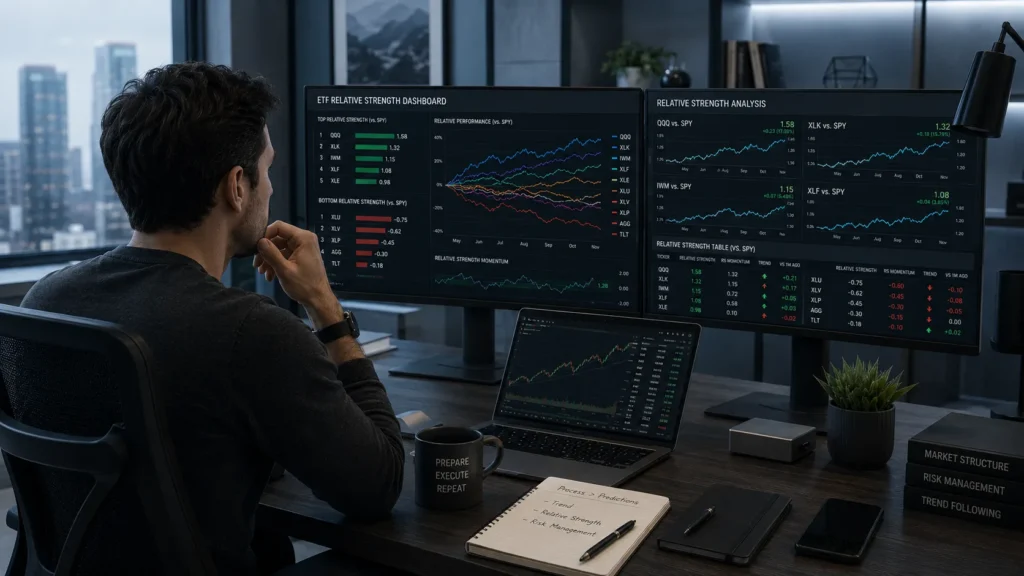
ETF relative strength matters more than opinions because it shows where capital is actually outperforming instead of where traders hope it will go.
How Sector Strength Helps Find Better Stock Trades

Sector strength helps find better stock trades by showing where capital is flowing before traders select individual names and technical entries.
How to Avoid Weak Stocks in Strong Markets
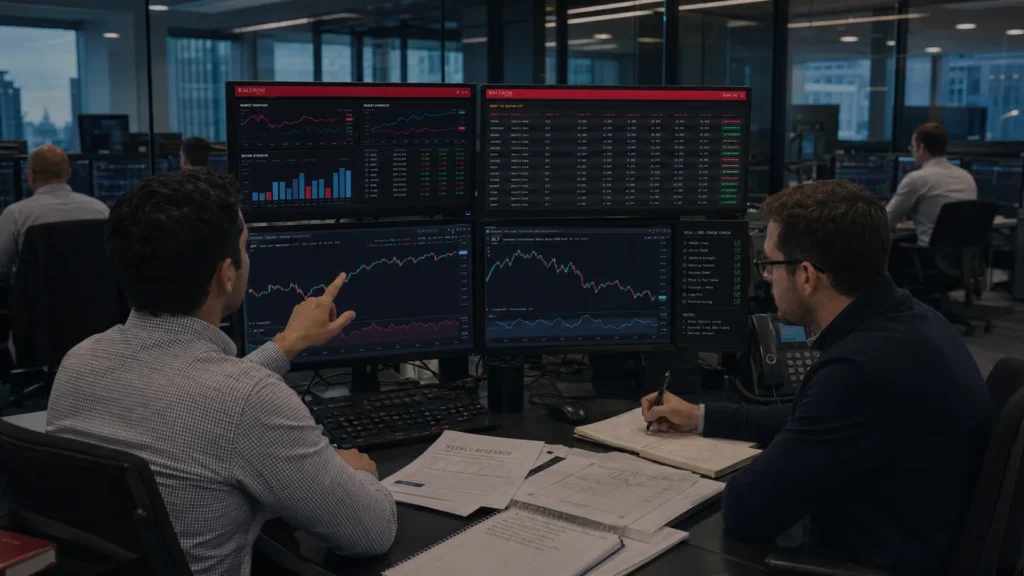
Avoid weak stocks in strong markets by using relative strength, sector comparison, trend filters, volume, and clear rejection of laggards.
How to Find Stocks With Momentum and Structure

Stocks with momentum and structure combine relative strength, clean trend behavior, volume confirmation, and technical levels traders can manage.
Why Currency Strength Is More Important Than Random Signals

Currency strength matters more than random signals because forex trading is relative and clean opportunities come from strong versus weak currencies.
How Valeron Filters Stocks Before Looking for Entries

Valeron filters stocks before entries by using macro context, sector strength, relative performance, fundamentals, technical structure, and risk.