
How ATR Helps Manage Risk in Commodity Trading

ATR in commodity trading helps traders size positions, place realistic stops, and adapt risk to fast-changing gold, oil, and energy volatility.
The Valeron Framework for Commodity Market Analysis

The Valeron framework for commodity market analysis combines macro regime, DXY, rates, inflation, related markets, technical structure, ATR, and risk.
How to Analyze Stocks Like a Trader, Not a Fanboy

Analyze stocks like a trader by separating admiration from execution, using macro context, sector strength, structure, volume, and risk.
How to Avoid Weak Stocks in Strong Markets
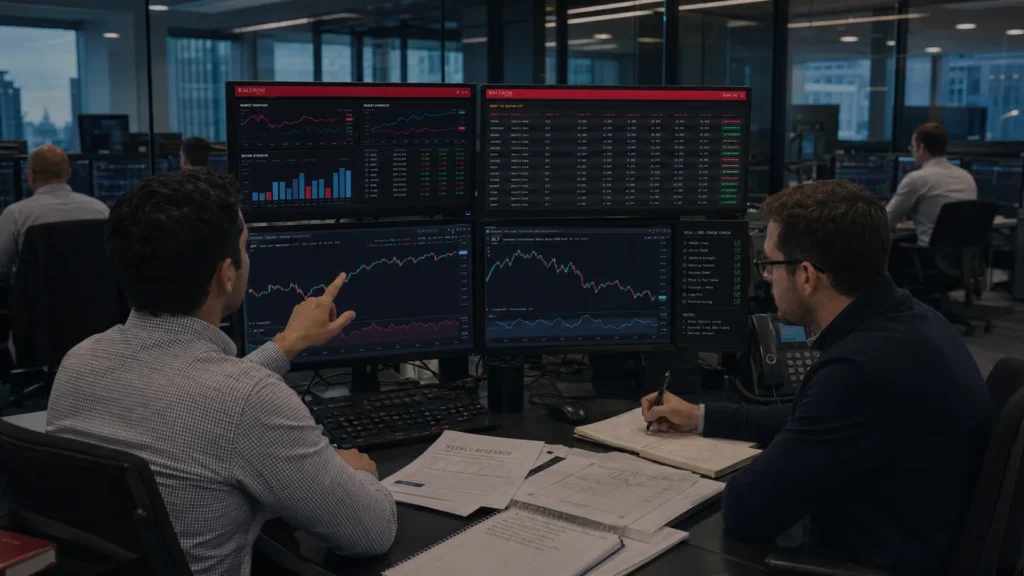
Avoid weak stocks in strong markets by using relative strength, sector comparison, trend filters, volume, and clear rejection of laggards.
How to Find Stocks With Momentum and Structure

Stocks with momentum and structure combine relative strength, clean trend behavior, volume confirmation, and technical levels traders can manage.
How to Use Moving Averages for Stock Trend Filtering

Moving averages for stock trend filtering help traders define trend direction, avoid weak stocks, and build cleaner stock selection rules.
The Difference Between a Good Company and a Good Trade

A good company and a good trade are different because business quality does not replace timing, structure, valuation, momentum, or risk control.
The Valeron Framework for Stock Trade Selection

The Valeron framework for stock trade selection combines macro context, sector strength, relative performance, technical structure, volume, and risk.
What Traders Should Watch Before Buying Growth Stocks

Before buying growth stocks, traders should watch rates, macro conditions, sector strength, valuation pressure, momentum, volume, and risk.
Why Volume Matters in Stock Breakouts

Volume matters in stock breakouts because it helps traders judge whether a move has real participation or only weak price drift.