
How Valeron Filters Stocks Before Looking for Entries

Valeron filters stocks before entries by using macro context, sector strength, relative performance, fundamentals, technical structure, and risk.
How Valeron Markets Turns Data Into Trading Decisions

Valeron Markets turns data into trading decisions by converting macro, sector, technical, and risk signals into a structured process.
How Valeron Reads Credit Risk Through HYG and LQD
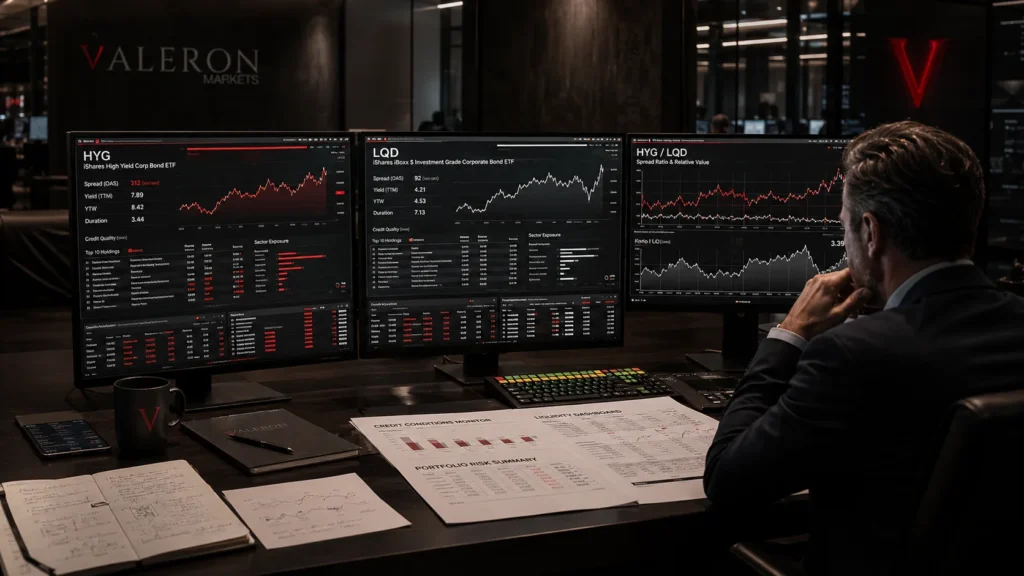
Valeron reads credit risk through HYG and LQD by comparing high-yield appetite against investment-grade safety and market stress.
How We Combine Macro Data With Technical Execution

Combining macro data with technical execution helps traders align market context, sector leadership, timing, volume, stops, and position size.
The Valeron Market Framework: Macro, Sector, Technicals, Risk

The Valeron Market Framework combines macro context, sector leadership, technical execution, and risk control into one trading process.
The Valeron Risk-On and Risk-Off Market Checklist
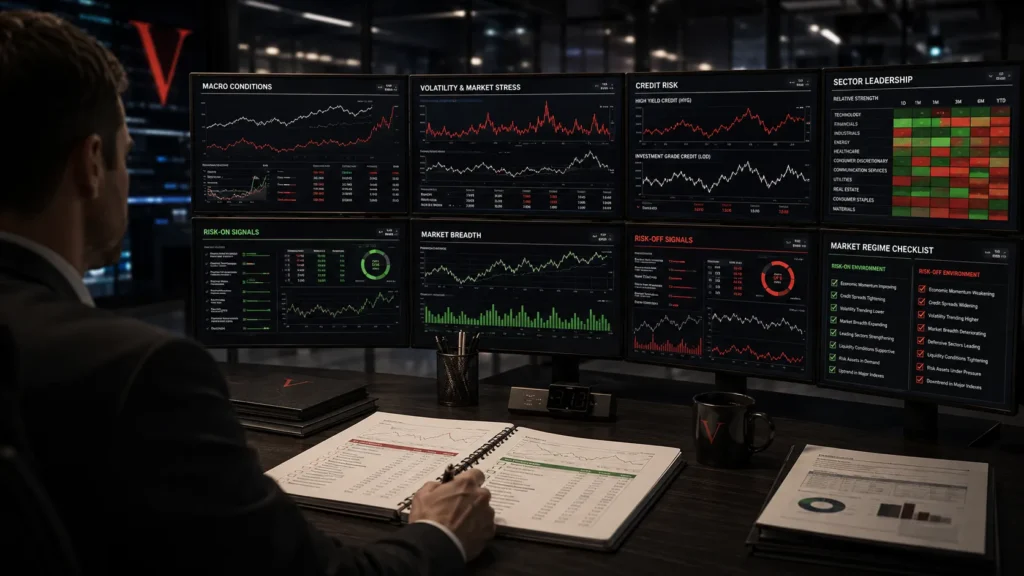
The Valeron risk-on and risk-off checklist helps traders define market tone through macro data, credit, volatility, sectors, and technicals.
The Valeron Thesis: Markets Are Efficiently Inefficient

Efficiently inefficient markets create opportunity because prices process information quickly but still leave exploitable gaps in behavior and structure.
The Valeron View on Sector Rotation and Market Leadership
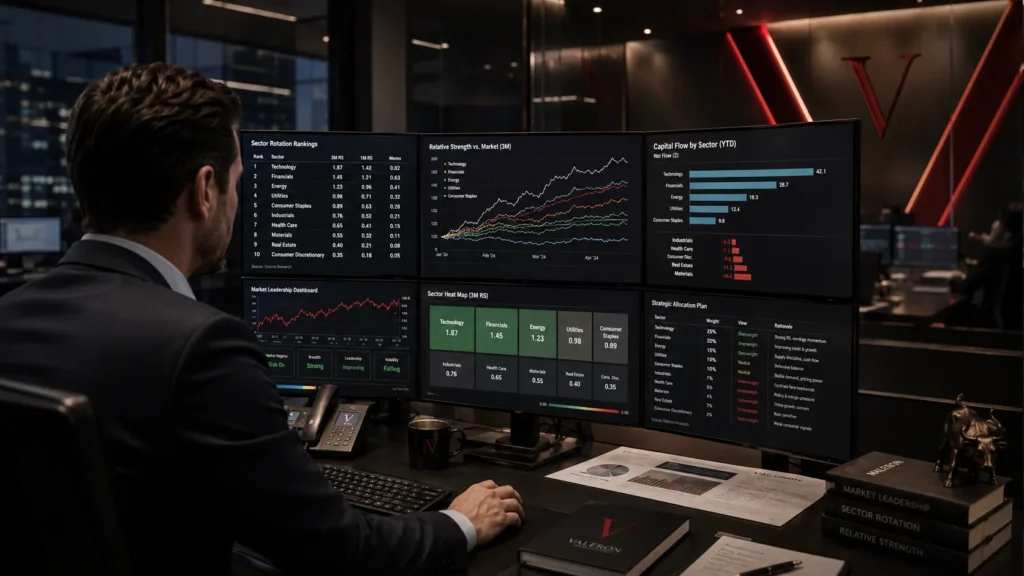
Sector rotation and market leadership reveal where capital is flowing and help traders focus on the strongest areas of the market.
Why Quantitative Data Beats Narrative in Market Analysis

Quantitative data beats narrative because market stories are emotional, late, and biased, while data creates a more objective decision process.
Why We Track the Yield Curve Before Market Sentiment

We track the yield curve before market sentiment because rates often reveal stress, caution, and regime change before narratives adjust.