ETF Trading Explained: A Smarter Way to Read the Market

ETF trading explained for serious traders: use ETFs to read market leadership, sector rotation, risk appetite, and technical structure.
How Sector ETFs Reveal Institutional Rotation

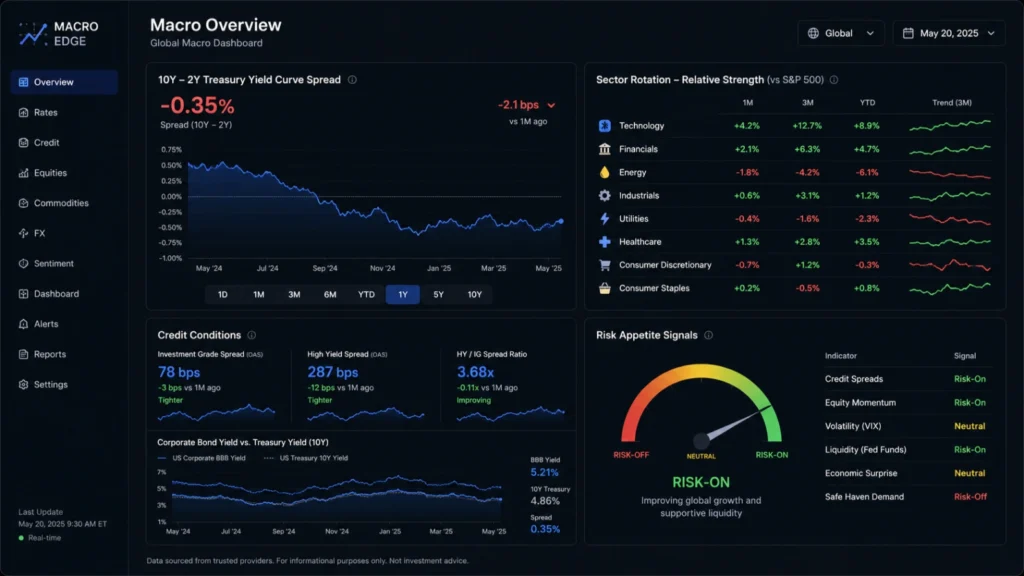
Sector ETFs reveal institutional rotation by showing which market groups attract capital, lose leadership, or shift into defensive behavior.
How to Use ETF Ratios to Understand Market Leadership

ETF ratios market leadership analysis helps traders compare sectors, risk appetite, growth, defense, and market strength with cleaner evidence.
How Valeron Uses ETFs to Build Market Context

Valeron uses ETFs to build market context by tracking benchmarks, sectors, ratios, defensive rotation, small-cap appetite, and technical structure.
Sector Rotation Trading With ETFs: A Practical Guide

Sector rotation trading with ETFs helps traders follow capital flow, identify leadership, avoid weak sectors, and time entries with structure.
Why ETF Relative Strength Matters More Than Opinions

ETF relative strength matters more than opinions because it shows where capital is actually outperforming instead of where traders hope it will go.
The Relationship Between Energy Stocks and Oil Prices

Energy stocks and oil prices are related, but traders must also consider margins, sector flows, equity risk, rates, and technical confirmation.
How Sector Strength Helps Find Better Stock Trades

Sector strength helps find better stock trades by showing where capital is flowing before traders select individual names and technical entries.
The Valeron View on Sector Rotation and Market Leadership

Sector rotation and market leadership reveal where capital is flowing and help traders focus on the strongest areas of the market.
Growth Stocks vs Defensive Stocks: When Each One Performs Better

Growth stocks vs defensive stocks is a macro and sector leadership question that depends on rates, risk appetite, and market tone.